How to Write a Bag Spec Sheet Your Supplier Can Quote From
A factory can only quote what is written down. A one-page spec sheet — finished dimensions, outer fabric, padding and lining, zippers and hardware, straps, pockets, logo and packing — gets you an accurate quotation in one round and a sample that matches your intent, while a message that just says "a bag like this photo, size L" starts a week of follow-up questions. This guide covers the eight fields every bag spec needs, and how to fill each one so a supplier can price it without guessing.
The eight fields of a bag spec sheet
1. Finished dimensions. Length × width × height of the finished bag — or, for equipment bags, the equipment's own dimensions plus the allowance you want. State which of the two you are giving; confusing them is the single most common spec error we see.
2. Outer fabric. Material and grade — for example, 900D Oxford — and the color. If the bag must match an existing product line, say so and send a swatch or a clear photo.
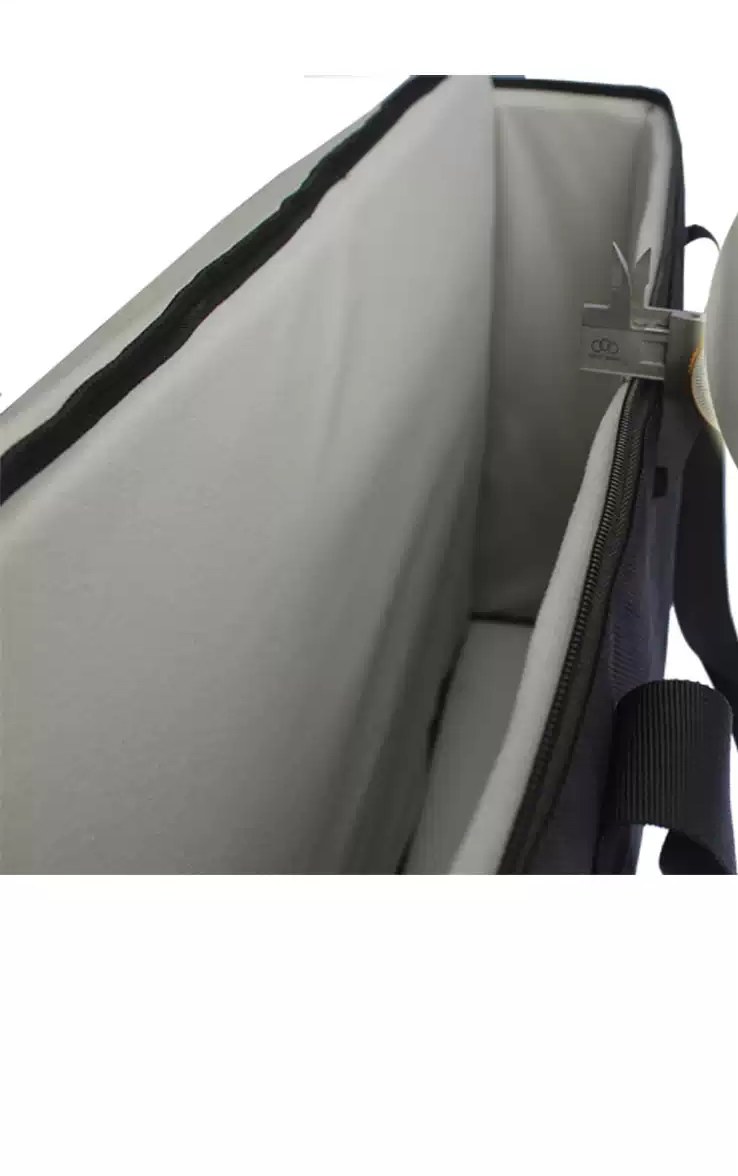
3. Padding and lining. Foam thickness and where it goes: all faces, or reinforced on specific faces. Add the lining material. This field drives both the protection level and a large part of the price.
4. Zippers and hardware. Zipper size and type (single or two-way), puller style, and buckle and ring materials. Hardware is where cheap quotes quietly save money, so name what you expect.
5. Straps and handles. Webbing width, handle construction, whether straps are fixed, adjustable or detachable, and where they anchor to the body.
6. Pockets and compartments. Count, position, size and closure for every pocket. "One front pocket" is not a spec; "front pocket 30 × 20 cm, zippered" is.
7. Logo. Method (silk screen, heat transfer, embroidery or woven label), finished size, position on the bag, and the artwork file itself.
8. Packing. Individual polybag or retail packaging, pieces per carton, and any carton labeling or barcode requirements.
| Field | Weak version | Quote-ready version |
|---|---|---|
| Dimensions | "Size L" | "To fit equipment 620 × 480 × 120 mm; add 20 mm working room" |
| Outer fabric | "Black polyester" | "900D Oxford, black, PVC backing" |
| Padding | "Padded" | "10 mm foam on all faces, extra layer on the base" |
| Logo | "Our logo on the front" | "Embroidery, 120 × 40 mm, centered on front panel, file attached" |
| Packing | "Standard" | "Each in a polybag, 20 pcs per carton, barcode sticker on polybag" |
Measurements: the field that decides fit
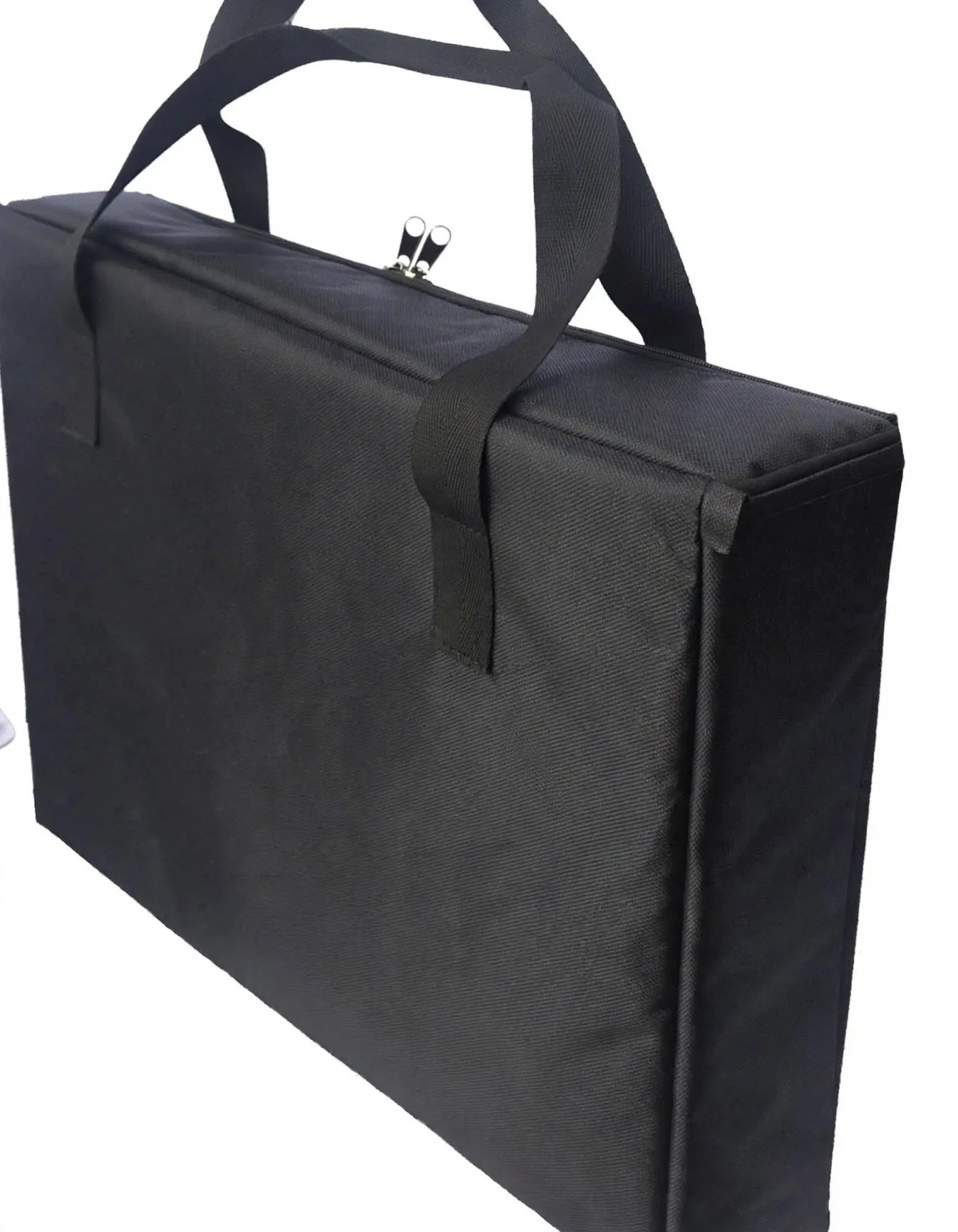
For an equipment bag like our all-in-one computer carry bag, the spec starts from the machine, not from the bag: the body dimensions at the widest points, including feet, stands and cable bulges. Add working room — roughly 1–2 cm overall — so the zipper closes without forcing, and note any protrusion that needs extra padding or a shaped cut-out. A photo of the equipment with a tape measure across it is worth a paragraph of description, and it travels with the spec sheet to the pattern maker.
Photos and references: mark what to copy, mark what to change
Reference photos belong in a spec — with annotations. Circle the pocket you want moved, cross out the strap you dislike, and write the change next to the image; unmarked photos get copied as they are, including the parts you hate. If you are combining features from two different products, say which feature comes from which photo. Our design team works from annotated references every day, and the customization page shows the kinds of changes buyers usually request.
What happens after you send it
With a complete spec, the factory makes the pattern, confirms anything ambiguous in one message, quotes against the written fields and cuts the sample — 5–7 days in our workshop. The spec then stays with the order: the sample is checked against it, bulk production follows it, and final inspection compares finished bags to it. If you later change a field, the sheet is updated and re-confirmed, so the change reaches the cutting table instead of being lost in a chat thread. If your spec is still a work in progress, send it via the contact page and we will help you finish it.
The short checklist
- Dimensions state clearly whether they are the bag's or the equipment's.
- Fabric named with grade and color, not just "polyester".
- Padding thickness and placement written down, face by face.
- Every pocket given a size, a position and a closure.
- Logo method, size, position and artwork file included.
- Packing and labeling written down, even if the answer is "standard export".
Questions buyers ask
I don’t have a spec sheet — can I just send a photo?
Yes. A photo, a sample or bare dimensions are all valid starting points; the spec sheet is then drafted with you, field by field, before sampling. The sheet exists to protect your order, not to gate it.
How exact do my measurements need to be?
Equipment dimensions should be measured at the widest points, protrusions included, and given to the nearest half centimeter. Small errors are absorbed by the working allowance; a missed protrusion — a stand, a handle, a reel — is what actually breaks a fit.
Can I change the spec after seeing the sample?
Yes. The sample exists precisely to trigger changes: note them against the spec fields, the sheet is updated and re-confirmed, and a revised sample is made if the change affects fit or construction.
Will you help me complete a half-finished spec?
Yes — send what you have. We return the sheet with the missing fields marked and our recommended options for each, so you are choosing from concrete alternatives instead of inventing specifications from scratch.