How to Choose a Fishing Rod Bag: Length, Padding and Carry Style
Choose a fishing rod bag by your longest rod section first: the bag must be longer than the longest single piece of rod you own, with padding where the guides and tip sit, and a carry style that matches how far you walk to the water. Get the length wrong and nothing else matters — the rod simply does not go in. This guide works through length, capacity, padding and carry in that order.
1. Length: measure the longest section, not the rod
A rod's rated length is its assembled length; what goes into the bag is its longest section. A two-piece rod packs at roughly half its rated length plus the handle section; a one-piece rod needs a bag at close to its full length. Measure the longest section including the tip, then choose a bag a few centimeters longer, so the zipper closes without pressing on the tip. Our fishing rod bag range runs to a 191 cm hand-carry size for long one-piece rods, with a 230 cm double-rod version above it — and because every bag is made to order, lengths between and beyond the standards are cut to your measurement.
2. Single or double: capacity is a layout question
| Single-rod bag | Double-rod bag | |
|---|---|---|
| Capacity | One rod, usually with the reel fitted | Two rods, or a rod plus spare sections |
| Profile | Slim; hangs flat in storage | Wider; carries a full session's outfits |
| Best for | One-rod anglers, travel, keeping outfits separate | Two-rod sessions and longer trips |
Think about the reel as well: a bag sized for the rod alone may not close over a fitted reel. If you store rods with reels on, say so when ordering — the pattern allows room at the reel position instead of forcing the zipper over it.
3. Padding: the guides and the tip decide
What breaks on a rod in transit is rarely the middle of the blank; it is the tip section and the guide rings, bent or cracked by a knock through the bag wall. Look for foam padding along the full length rather than a plain fabric tube, and check how the tip end is finished — extra foam over the last stretch of the bag protects the most fragile part of the rod and is worth more than extra thickness everywhere else. Inside, a smooth lining matters: rough seams and exposed zipper teeth scratch blanks and catch on guide feet every time the rod slides in or out.
4. Fabric and color for the bank
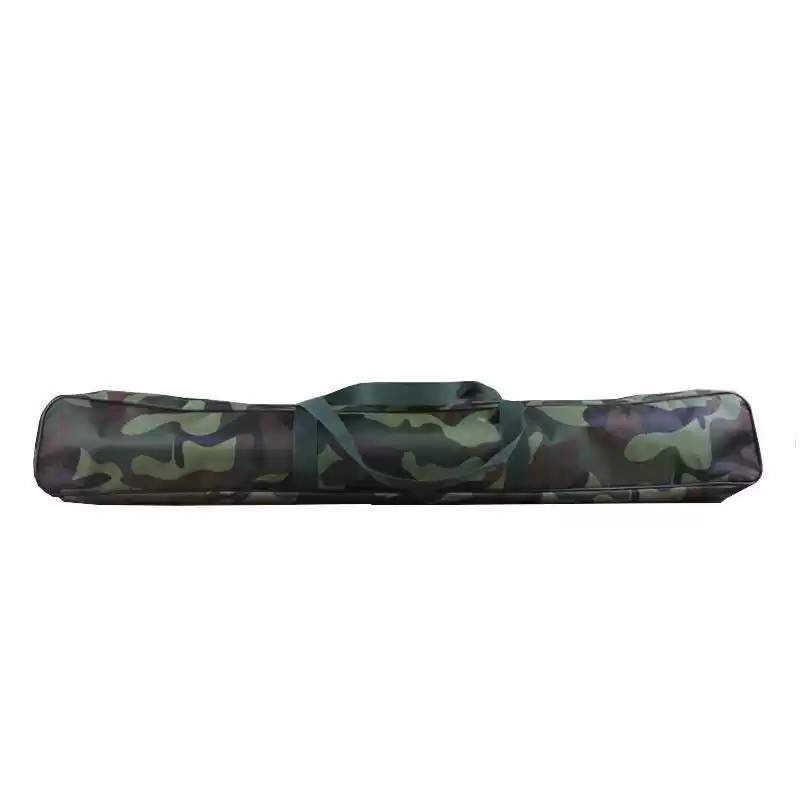
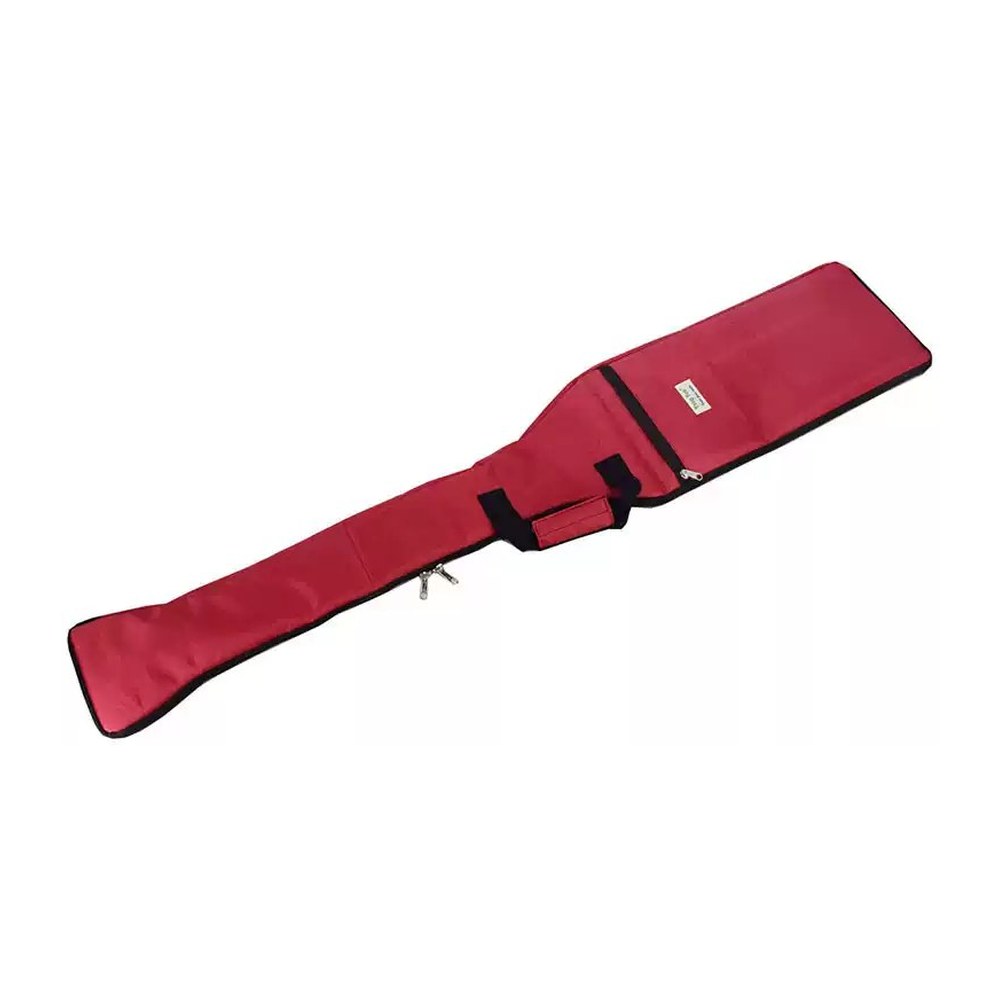
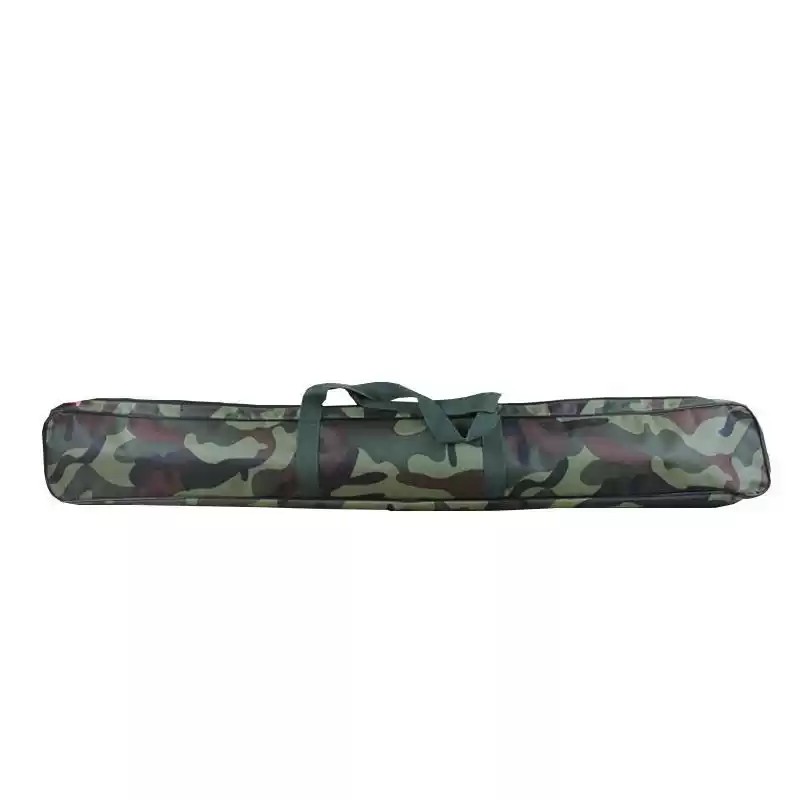
Rod bags live outdoors: dragged over gravel, leaned against wet banks, left in the sun on a car roof. Oxford fabric with a water-resistant backing shrugs off bankside splashes and wipes clean, which is why it is the practical standard for rod luggage. Our range comes in black, army green and camouflage — the colors tackle brands and retailers ask for — and custom colors are made to order, with your logo by printing or embroidery for retail lines. The full fishing bags range shows the color and length options side by side.
5. Carry style: hand, shoulder, or both
Short walks from car to peg suit a hand-carry bag with a well-placed handle — on a 191 cm bag, the balance point matters more than the handle's padding, because an unbalanced long bag swings against your legs with every step. Longer walks to remote swims argue for a shoulder strap, so both hands stay free for the rest of the tackle. Many buyers order both: a top handle for loading the car, plus an adjustable shoulder strap for the walk.
6. Storage at home counts too
A rod bag works between trips as well as during them. Rods stored in their bags are protected from the two quiet causes of damage: being knocked over in a garage corner, and dust and grit settling into the guides and reel. Hang the bag by its handle loop or lay it flat rather than standing it on the tip end, and let a wet bag dry open before zipping it shut — Oxford fabric dries quickly, but a sealed damp bag keeps moisture against the rod and reel. Buyers who order rod bags as retail products often ask for a hanging loop and a clear size label for exactly this reason: the bag is how the rod lives at home, not just how it travels.
The short checklist
- Longest rod section measured, tip included — the bag a few centimeters longer
- Reel on or off in storage? The pattern must allow for it
- Foam along the full length, with extra protection at the tip end
- Oxford fabric with a water-resistant backing for bankside use
- Handle balance checked at full length; a shoulder strap for long walks
Questions buyers ask
What length bag do I need for a one-piece rod?
A bag longer than the rod itself. Measure the rod from tip to butt and add a few centimeters; our hand-carry range runs to 191 cm, the double-rod version to 230 cm, and custom lengths are made to order.
Can the bag hold a rod with the reel fitted?
Yes, if it is ordered that way. Tell us the reel size and position and the pattern allows room for it, instead of forcing the zipper over the reel.
Which colors are available?
Black, army green and camouflage are the standard colors. Custom colors, and logos by printing or embroidery, are available on OEM orders.
What is the minimum order for custom rod bags?
500 pcs for this range, with samples in 5–7 days and production in 20–30 days after sample approval.
Send your rod lengths and quantities through the contact page and we will match the bag to the longest section you own.