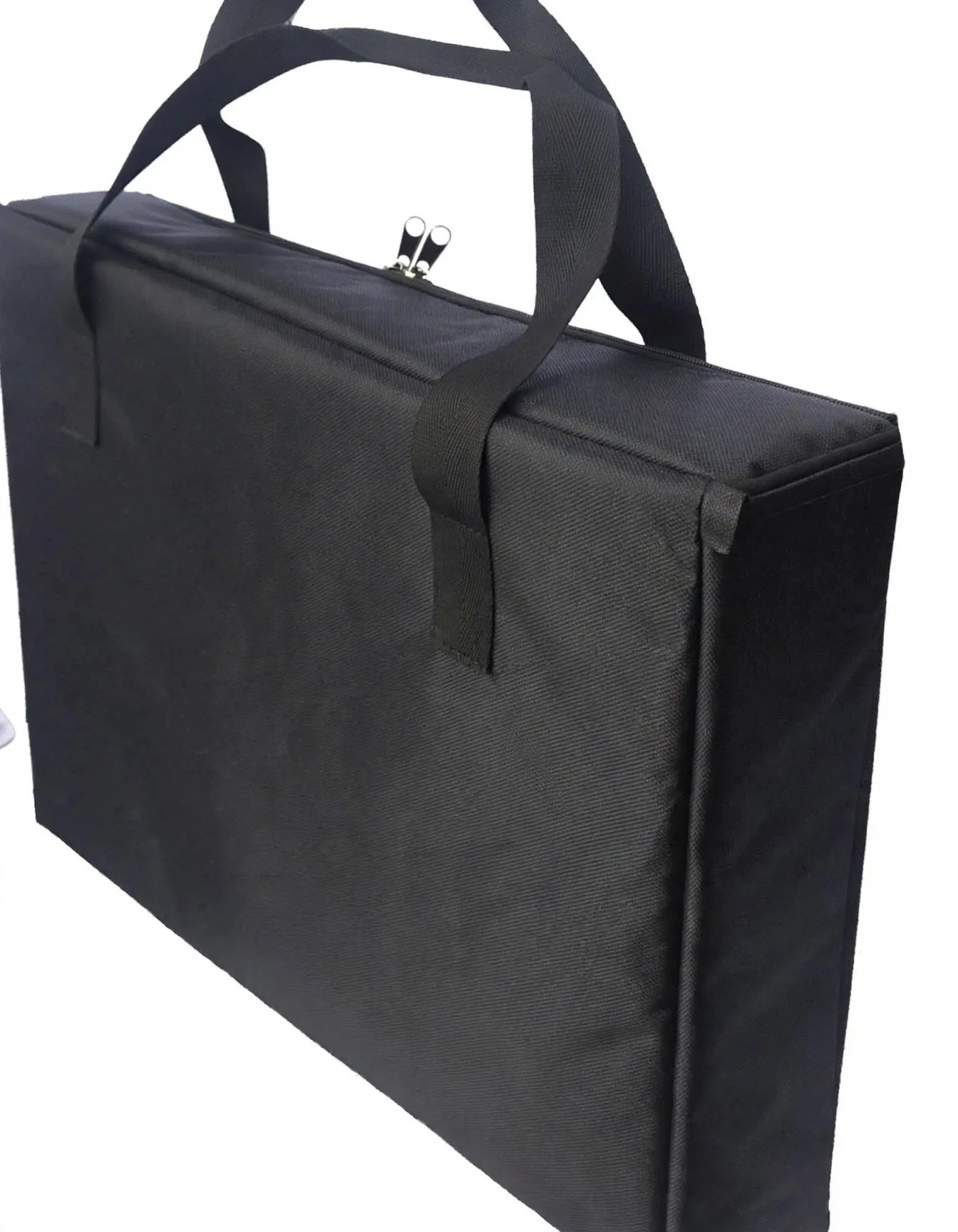
Solar Panel Bag Sizes: Matching the Bag to Your Folding Panel
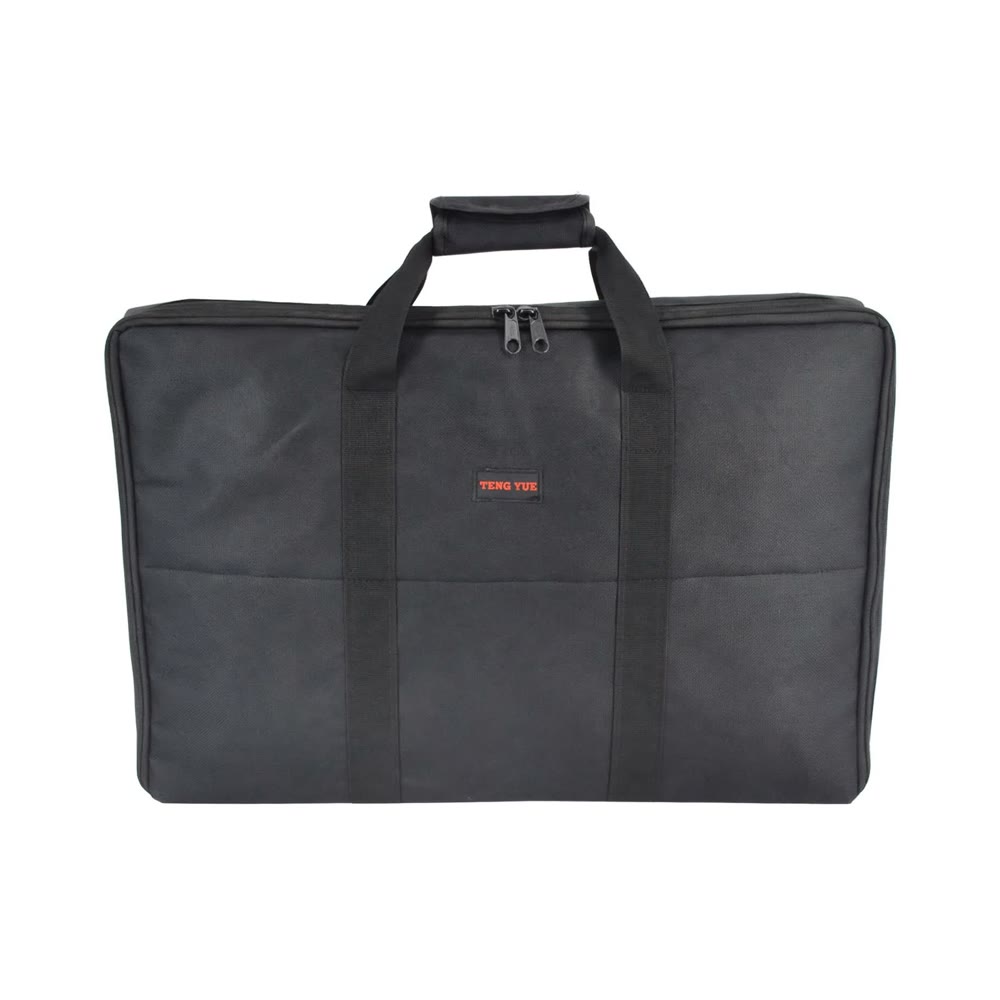
The right solar panel bag is the size whose internal dimensions clear your panel's folded length, width and thickness by about 1–2 cm on each side — close enough that the panel cannot slide, loose enough that the zipper never presses on the frame. Panels are glass-fronted and unforgiving of point loads, so the fit and the padding have to work together. Below are the six sizes we make as standard, and how to match one to your panel.
1. Measure the panel folded, cables included
Measure the panel the way it will travel: folded shut, with its kickstand, junction box and cable bundle in their travelling positions. The cable bundle is the part buyers forget, and it is usually the thickest point of the whole package. Record length × thickness × width in that order, because bag sizes are listed the same way. Then add the working allowance: roughly 1–2 cm on length and width, and enough thickness that the zipper closes without squeezing the frame.
2. The six standard sizes
| Bag size (L × T × W, cm) | Suits folded panels up to approx. |
|---|---|
| 45 × 5.5 × 44 | 43 × 42 cm — slim folding panels |
| 54 × 7 × 38 | 52 × 36 cm — the compact standard (bag weight ≈ 0.4 kg) |
| 59 × 8 × 55 | 57 × 53 cm — mid-size panels with a cable kit |
| 63 × 5.5 × 61 | 61 × 59 cm — wide, slim panels |
| 66 × 9 × 33 | 64 × 31 cm — long, narrow formats |
| 129 × 5 × 80 | 127 × 78 cm — large folding arrays |
The full specification of the range is on the solar panel carry bag product page. If your panel lands between two sizes, choose by thickness first: a panel that fits in length but strains the zipper in thickness is worse protected than one with a centimeter of spare length.
3. Padding and lining: 5 mm foam behind a smooth face
Our bags pad every face with 5 mm foam inside a 600D Oxford shell. Five millimeters sounds thin next to instrument bags, and for a panel it is the right call: the panel is a rigid sheet, so the foam's job is to spread point loads and stop frame corners digging through, not to absorb drops. What touches the panel matters more. A smooth 230D lining slides over the glass and frame without scuffing, and it does not trap grit against the surface the way a coarse lining can. Keep the inside of the bag clean for the same reason: grit in a bag is sandpaper on a panel.
The same logic covers storage. A panel stored in its bag is protected from the knocks of a garage or a vehicle load bed, and the bag keeps the charging cables with the panel instead of in a separate box that gets left behind. If the bag will live in a vehicle, choose the size by the folded thickness with the cables packed the way you actually pack them — a cable bundle forced flat to make a thinner bag closes is a cable bundle being crushed against the junction box on every trip.
4. Carry: handles and a shoulder strap
Even the compact sizes are awkward two-handed carries — wide, flat and heavier than they look — so the range is built with top carry handles with a padded wrap, plus a shoulder strap for the walk from the vehicle to the pitch. On the 129 cm size the strap is not a luxury; it is the difference between carrying the panel and dragging it. The handle and strap anchoring is sewn into the seams, because a loaded panel bag hangs its whole weight from those points.
5. When no standard size fits
Folding panels do not follow one standard the way phones do, so a good share of our orders are cut to the buyer's dimensions: send the folded measurements — or a photo of the panel with a tape measure across it — and the pattern follows them. Custom sizes carry the same construction and the same logo options (silk screen, heat transfer, embroidery or woven label), which suits solar brands and RV retailers who bundle the bag with the panel as one retail product.
The short checklist
- Panel measured folded, cable bundle and junction box included
- 1–2 cm working allowance on length and width; the zipper must not squeeze the frame
- Thickness checked before length when choosing between sizes
- 5 mm foam on every face, smooth 230D lining against the glass
- A shoulder strap on any size you will carry further than a car park
Questions buyers ask
How much bigger than my panel should the bag be?
About 1–2 cm on length and width over the folded panel, cables included. That clears the zipper without letting the panel slide inside the bag.
Is 5 mm padding enough for a glass-fronted panel?
Yes, for transport protection. The panel is rigid, so the foam's role is spreading point loads and protecting the frame; the smooth 230D lining protects the glass surface from scuffing.
Can you make a bag for a panel size that is not in the table?
Yes. Send the folded dimensions, or a photo with measurements, and we cut the bag to size, with a sample made first for your approval.
What is the minimum order for solar panel bags?
500 pcs for this range; samples take 5–7 days and production runs 20–30 days after sample approval.
Send your panel's folded dimensions through the contact page and we will confirm the matching size — or cut one to fit.