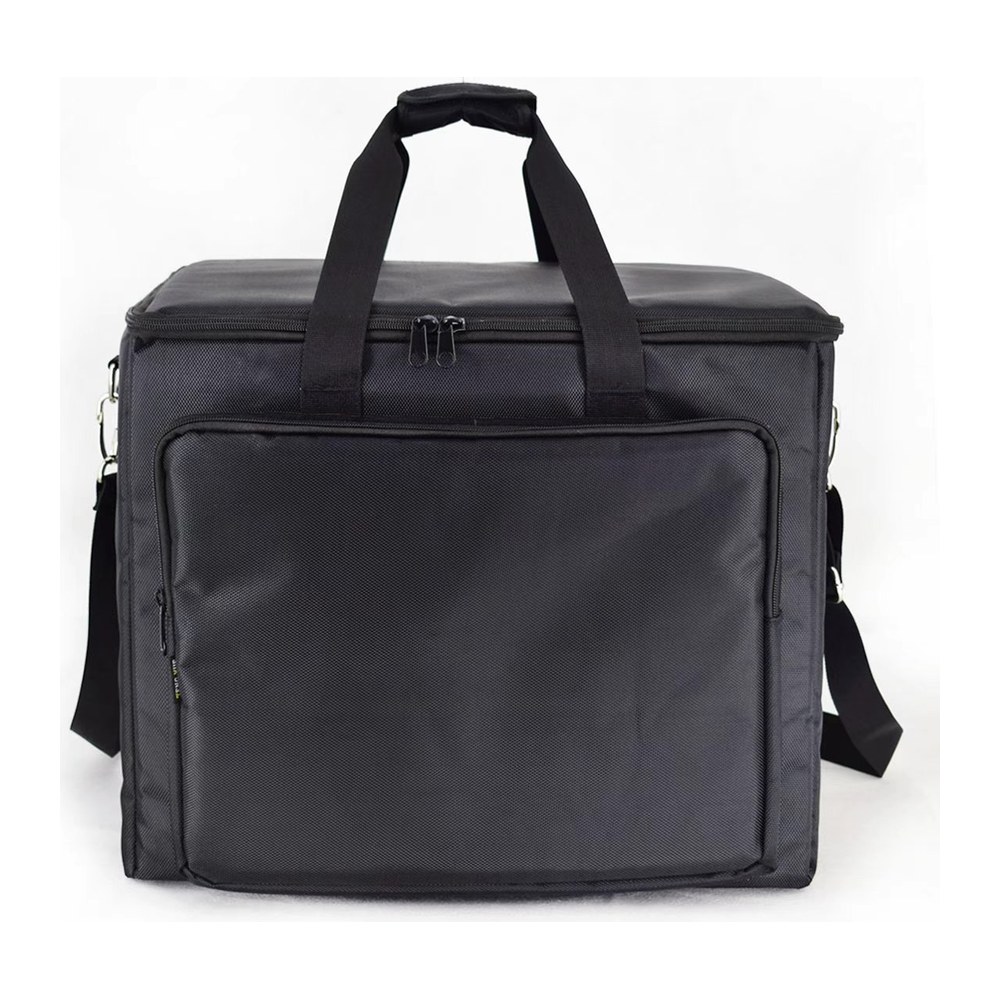
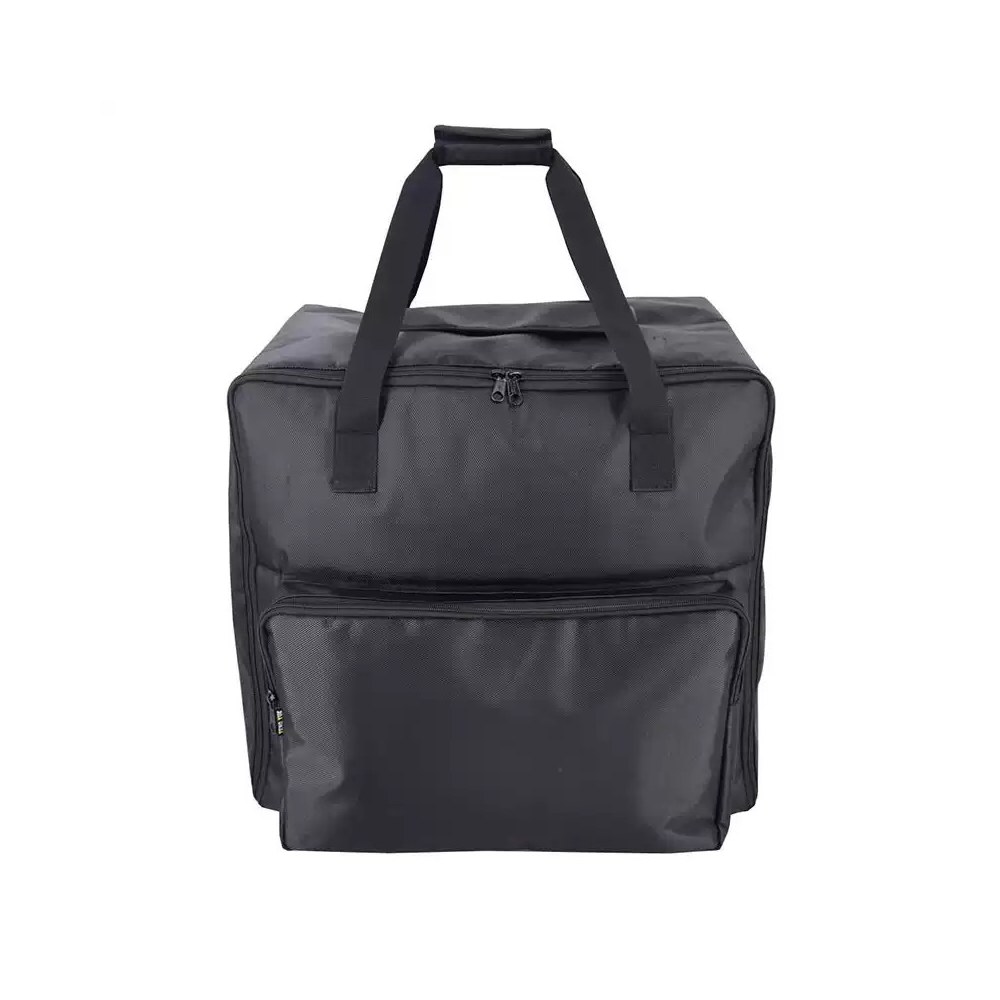
Bag Padding Thickness Explained: 3mm, 5mm, 10mm and Beyond
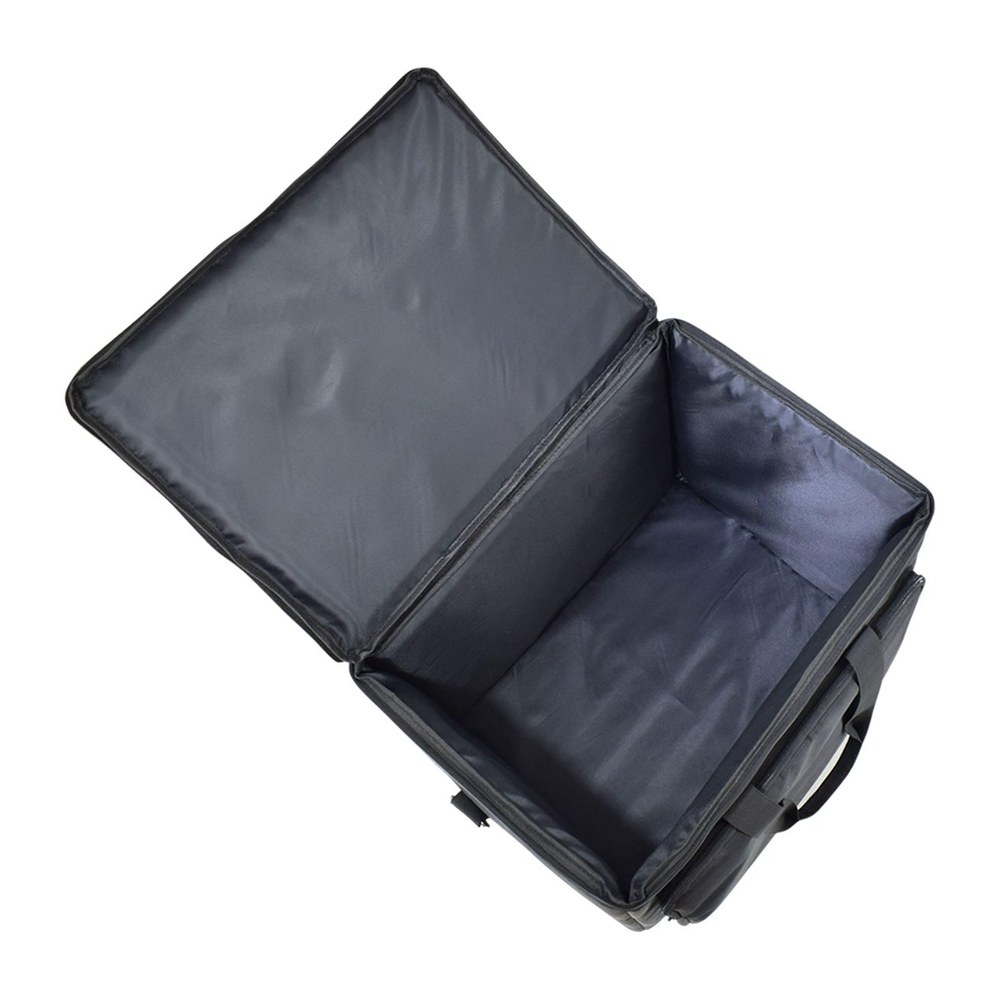
The right padding thickness is the one matched to how the equipment travels and what can break on it — not the thickest foam on the list. In our own range that means 3 mm of foam in a padded handle sleeve, 5 mm in a solar panel bag, and 10–11 mm in our amplifier and computer bags. The reasoning behind those three numbers covers almost every bag we make.
1. What padding actually does
Foam padding does two jobs. The first is separation: it keeps hard surfaces from touching, which stops scratches, scuffs and worn corners. The second is impact spreading: when a bag lands on a corner, the foam compresses and spreads that point load over a wider area of the equipment, so a knob or a screen edge does not take the full force in one spot. Thin foam does the first job well. The second job needs thickness to compress into — that is the whole logic of the numbers below. Padding also damps the constant small vibration of vehicle travel, which is why seams and solder joints survive longer in a padded bag than in an unpadded cover.
2. The working range, thickness by thickness
| Foam thickness | Protects against | Typical use |
|---|---|---|
| 3 mm | Scratches, scuffs, light contact | Handle sleeves, light accessory bags, inner dividers |
| 5 mm | Everyday knocks, stacking pressure, short drops | Solar panel bags, light electronics, rod and paddle bags |
| 10–11 mm | Corner drops, vehicle transport, daily professional use | Guitar amplifier bags, amp head bags, all-in-one computer bags |
| 15–20 mm | Rough handling, freight and cargo travel | High-value or fragile equipment that ships as cargo |
Our own products sit on this scale for specific reasons. The padded carry handle sleeve uses 3 mm foam because its job is grip comfort and scuff protection, not drop protection. The solar panel carry bag uses 5 mm: panels are flat and rigid, they travel short distances, and the enemy is stacking pressure and edge knocks. Amplifier bags and the all-in-one computer bag run at 10–11 mm because their cargo — control knobs, corner joints, screens — meets car boots, door frames and load-in ramps every day. Our earlier guide on how to choose a padded equipment carry bag shows how the padding decision combines with fabric grade and fit.
3. Placement beats thickness
A bag with 5 mm everywhere and doubled foam on the corners will out-protect a bag with a uniform 10 mm in most real drops, because impacts land on corners, edges and protrusions — not evenly across flat faces. When we build a custom bag, the fragile face identified by the buyer — the screen side, the control panel side, the blade edge — gets the padding priority, and carry faces stay lighter. This is also why two bags with the same headline thickness can perform very differently, and why we ask what can break before we quote a foam spec.
4. When thicker stops helping
Past the level your transport risk needs, extra foam works against you. It adds bulk and weight to every unit, raises freight cost because cartons grow, makes bags harder to fold and store, and can make the fit sloppy if the pattern is not adjusted for it. At the far end, 20 mm of foam everywhere is usually a sign that the transport problem should be solved differently — equipment that genuinely travels as freight, stacked and forklifted, belongs in a hard case, and a good supplier will tell you so rather than sell you a thicker bag.
5. How we set the spec on a custom order
Three questions set the foam spec: what on this equipment can break, how does it travel — by hand, in a car, or as cargo — and how heavy is it? The answers map straight onto the table above. On our guitar amplifier bag, for example, the 10 mm-class padding is paired with a smooth lining so the covering is protected from scuffs as well as knocks. Whatever the spec, the sample proves it: samples are ready in 5–7 days, and we encourage buyers to load the real equipment, carry it, and set it down hard before approving production.
The short checklist
- Name the most fragile face or part of the equipment
- Decide how it travels: by hand, in a vehicle, or as cargo
- Match thickness to the risk — 3, 5, 10 or 15 mm and up
- Ask for reinforced padding on corners and protrusions
- Test the sample with the real equipment inside
Questions buyers ask
Is thicker padding always better?
No. Past the level your transport risk needs, thicker foam only adds bulk, weight and freight cost, and can make the fit sloppy. Match the thickness to how the equipment travels: hand-carried gear rarely needs cargo-grade foam.
What padding thickness does a guitar amplifier bag need?
Foam in the 10 mm class is the working standard for amplifier bags. It absorbs the corner drops and knocks of daily vehicle transport, which is how most amplifiers are damaged. Our amplifier and amp head bags are built at 10–11 mm for this reason.
Can one bag have different padding thicknesses in different places?
Yes — mixed padding is standard practice on our custom orders. The fragile face and the corners get thicker or doubled foam while the carry faces stay thinner, which keeps protection where impacts land without making the whole bag bulky.
Does foam padding make a bag waterproof?
No. Padding is impact protection only. Water resistance comes from the outer fabric and its coating, and no padded soft bag should be treated as waterproof — it sheds light rain, but it is not a dry bag.