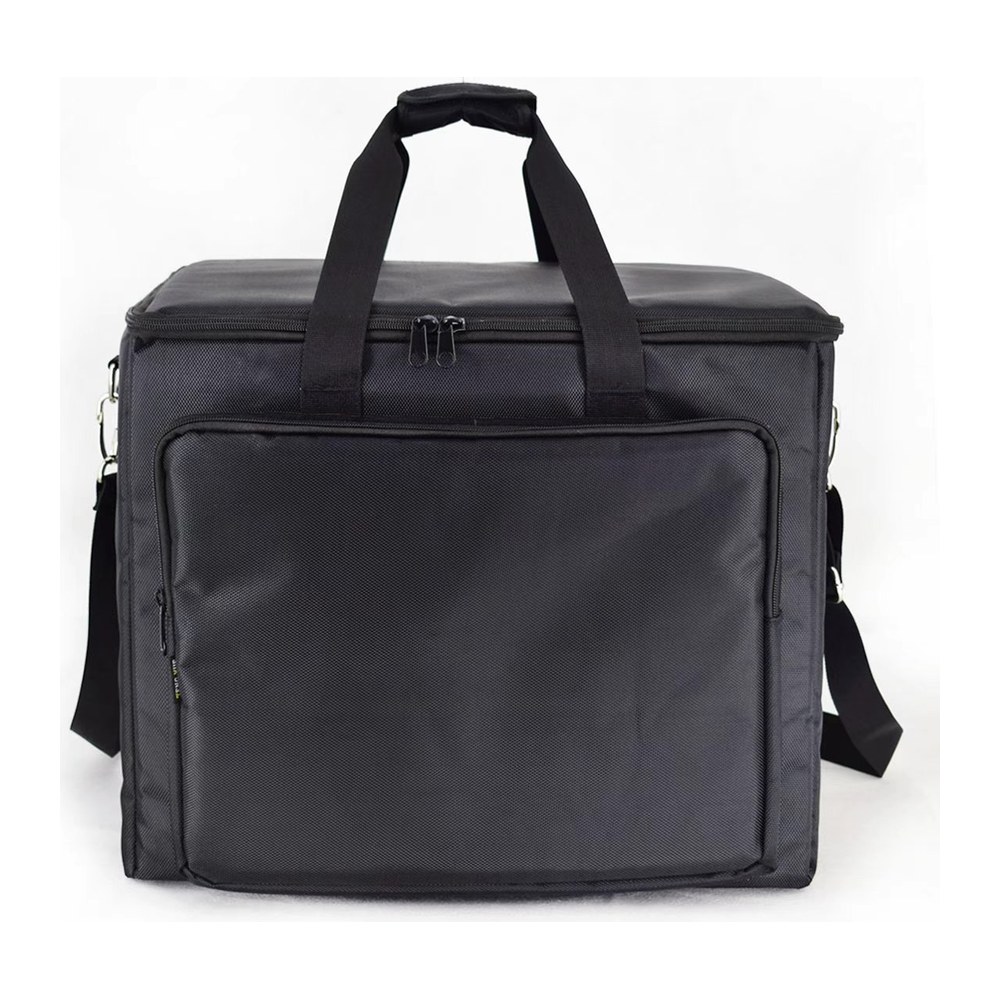
Gig Bag vs Hard Case for Your Amplifier: Which Protection Do You Need?
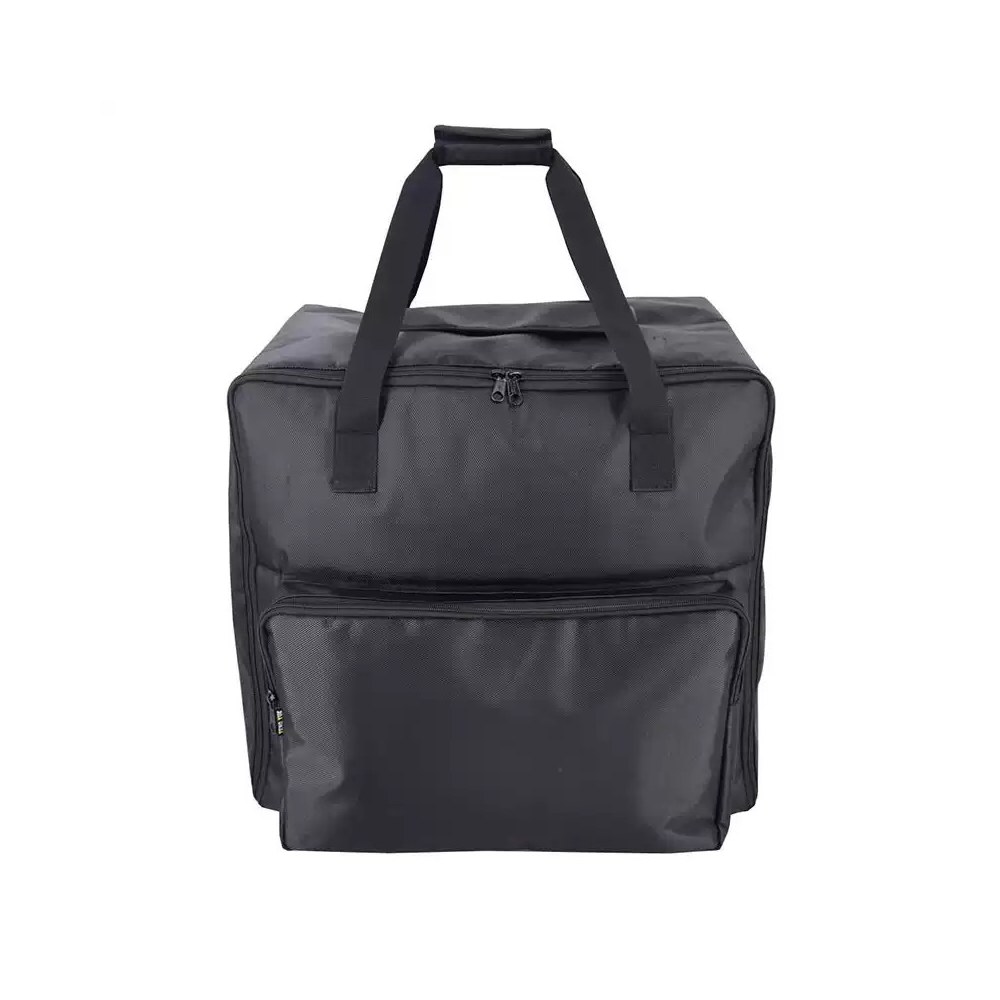
For most amplifiers that travel by hand or in a car, a well-padded gig bag is the right protection — a hard case only earns its extra weight and freight cost when the amp is stacked, freighted or handled by other people. Neither is simply "better"; the right choice depends on how your amp actually travels. Here is how the two compare, and the middle path most of our buyers end up taking.
What a padded gig bag does well
A gig bag protects with foam: it absorbs the knocks, bumps and scrapes of everyday transport — door frames, stairs, car boots, rehearsal-room corners. Because it is fabric, it is light, it folds flat for storage, and it can be cut to the exact shape of the amp, including backpack straps for amp heads, like our guitar amplifier head bag, which leaves both hands free for a guitar and a cable bag. A front pocket keeps the power lead, speaker cable and spare parts with the amp instead of in a separate box.
Its limit is crushing. Foam spreads a knock; it does not hold off the weight of other equipment stacked on top, and it will not save an amp dropped from height onto a corner.
What a hard case does well
A hard case protects with a rigid shell: it resists stacking loads, freight handling and the general abuse of touring logistics, where the amp travels in a truck or a hold with equipment piled around it. That protection costs you three times over — at purchase, in the case's own weight on every single carry, and in freight, because a rigid case ships at its full volume whether the amp is in it or not. For a locally gigging amp, many players end up leaving the case at home because it is awkward — which means the amp travels unprotected anyway.
| Padded gig bag | Hard case | |
|---|---|---|
| Protects against | Knocks, bumps, scratches, dust and rain | Stacking, crushing and freight handling |
| Weight | Light — a small fraction of the amp's own weight | Substantial — it adds real weight to every carry |
| Storage | Folds flat when empty | Full size, always |
| Carry options | Handles, shoulder strap or backpack straps | Usually a single handle |
| Branding | Print, embroidery or woven label across the face | Stencil or plate on a limited area |
| Best for | Hand and car transport, local gigs, rehearsals | Touring freight, rental shipping, stacked loads |
The deciding questions
Ask how the amp travels, not what it cost. Car boot and hand carry a few times a month: gig bag. Checked freight, courier networks or a backline truck: hard case. One more question settles most borderline cases — who handles it? An amp that only you carry can travel soft. An amp handled by venue staff, couriers or students needs protection matched to the roughest handler, not the average one.
The middle path: a gig bag built like it matters
Most buyers who ask us this question land in the middle: a made-to-measure gig bag with the foam placed where their amp is vulnerable. Movement inside the bag is an underrated cause of damage — an amp that shifts at every braking arrives worn even without a single drop — so the pattern is cut to the amp's dimensions, with extra foam over the control panel and corners. Our guitar amplifier bag is built this way, in 59 sizes matched to amplifier models, and the same construction applies to any combo or head. Add a rain-resistant Oxford shell and the bag covers every journey except freight stacking — at a weight the player will actually carry.
For brands: the bag is part of the product
Amplifier brands face this choice at product level, not trip level: the bag the amp ships in is the protection most owners will ever use, and it carries the brand's logo into every rehearsal room and venue. A made-to-measure padded bag adds far less to the shipped weight and volume than a hard case, which keeps freight on the whole product line down, and it stores flat in the warehouse until the day it is packed with an amp. That is why most of the amp bags we produce are OEM gig bags with the brand's printing or embroidery — the hard cases in the same ranges are usually reserved for the rental and touring lines, where freight handling is part of the business model.
The short checklist
- How does the amp travel — hand, car, or freight?
- Who handles it — only you, or staff and couriers too?
- Will anything stack on top of it in the vehicle?
- Does the fit stop the amp moving inside the bag?
- Is there a pocket for the power lead and speaker cable?
Questions buyers ask
Is a padded gig bag safe for a tube amp head?
Yes, for hand and car transport. Cut to the head's dimensions with foam over the control panel, a gig bag absorbs the knocks of normal carrying; choose a hard case if the head travels as freight.
How thick should the padding be?
10 mm foam is the working standard for amplifiers in daily transport, with extra thickness over the control panel and corners, where the amp is most vulnerable.
Can a gig bag be made for my exact amplifier?
Yes. Send the model name or its length × width × height and we cut the bag to fit, with a sample made first for your approval.
What is the minimum order for custom amp bags?
300–500 pcs depending on the model, with your logo by silk screen printing, heat transfer, embroidery or woven label.
Tell us the model and how it travels via the contact page — we will tell you honestly which side of this comparison your amp falls on.