How to Choose a Speaker or PA Bag
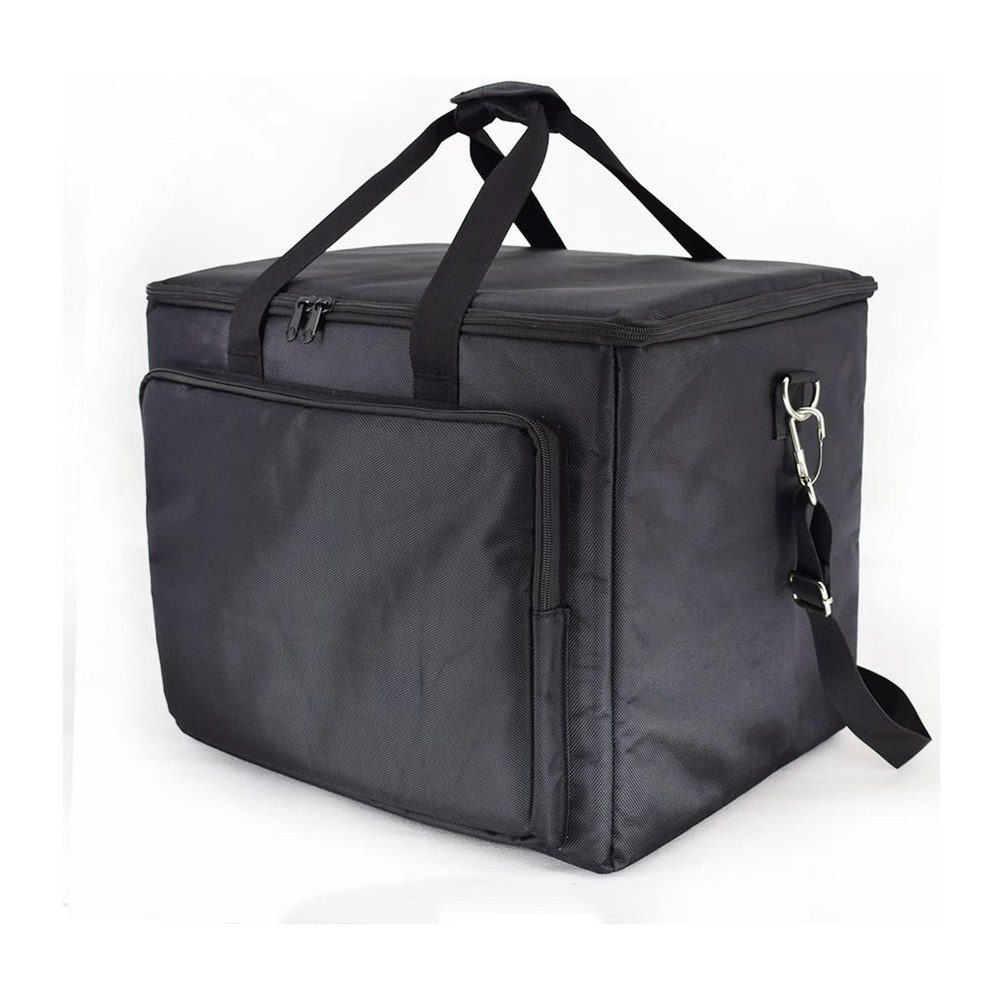
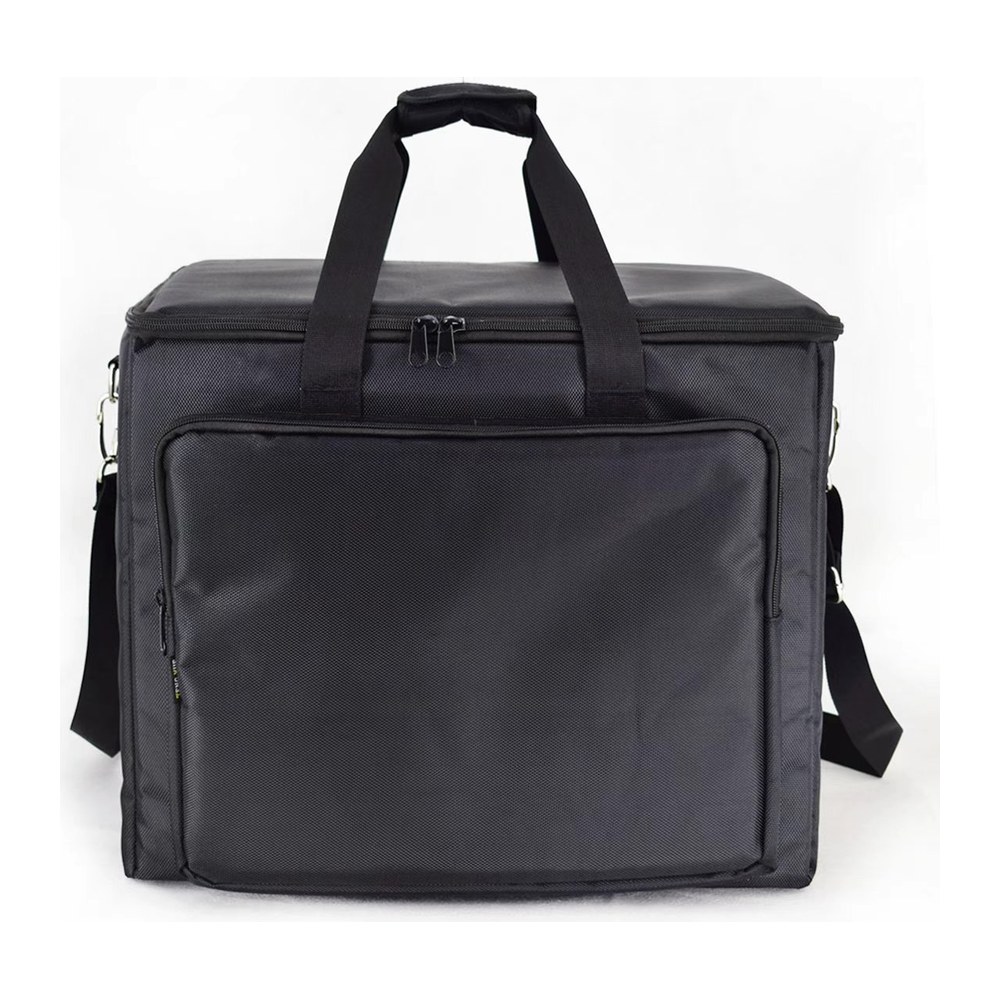
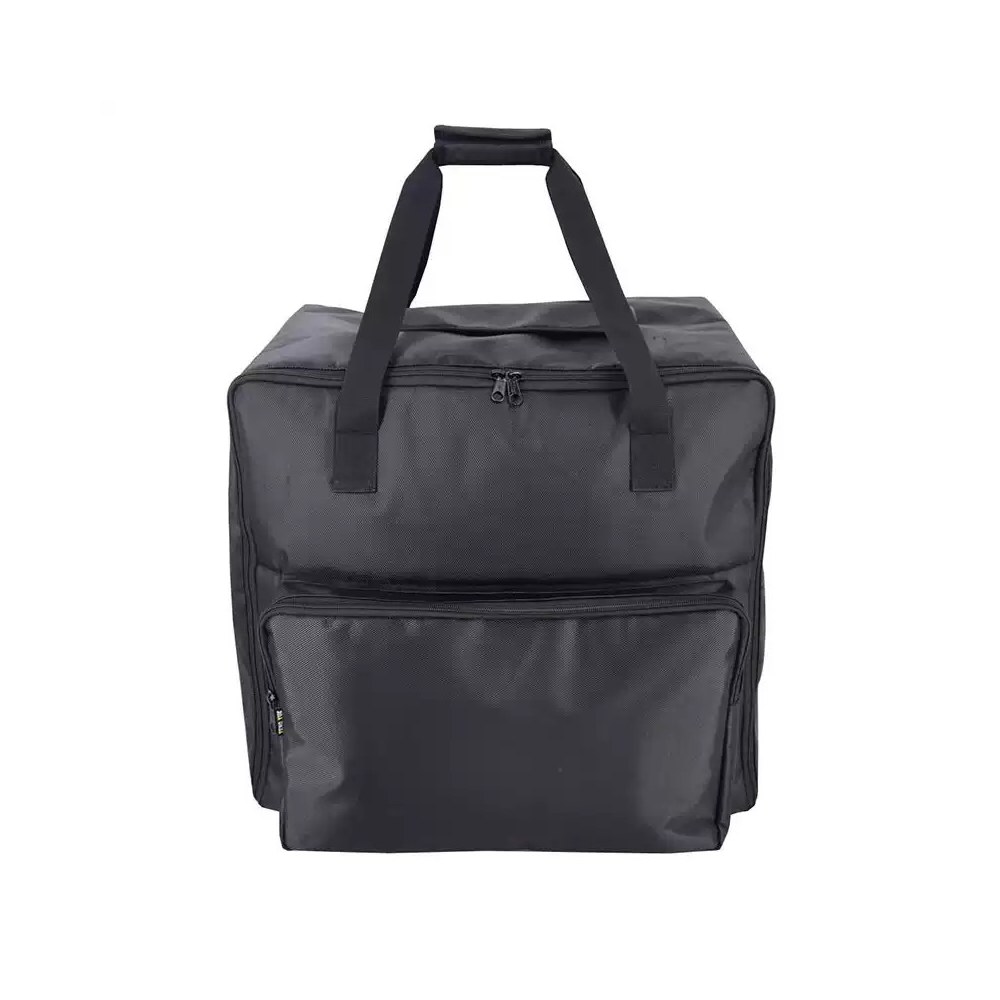
The right speaker or PA bag is the one cut to your cabinet's exact outside dimensions, with foam over the grille and corners, and a carry system matched to how heavy the speaker is. "Fits most 12-inch speakers" is where most damage starts: a cabinet that slides around inside its bag arrives with scuffed corners and a dented grille. This guide works through the four decisions that matter — size, padding, fabric and carry — the same four we go through with every buyer who orders speaker and audio bags from us.
1. Start with the cabinet, not the size label
Measure the speaker itself: length × width × height at its widest points, including rubber feet, corner protectors and the handle. Powered speakers need one extra check — the amplifier panel on the back, with its knobs, switches and heat sink, is usually the most fragile face of the cabinet, and it is the face a generic bag pads least. Add roughly 1–2 cm of working room over the bare dimensions so the zipper closes without forcing, but no more than that: a bag that is too big lets the cabinet travel inside it, and movement is what wears corners away.
If you order in quantity for a speaker range, send us the model list or one sample cabinet. Our in-house design and pattern team works from the buyer's dimensions, photo or sample, so every size in the range follows the same fit logic instead of a generic size chart.
2. Padding: protect the faces that take the knocks
For speakers that travel in cars and vans to gigs, rehearsals and events, 10 mm foam is the working standard: enough to absorb the everyday knocks of loading and stacking without making the bag bulky. Placement matters as much as thickness. The front face needs full coverage because the grille and the cone behind it sit there; corners need foam that wraps around them, because corners are what hit door frames and tailgates. A soft lining inside stops seams and zipper teeth from marking the cabinet's finish.
Lighter duty — a small speaker that lives in a studio and moves twice a year — can drop to 5 mm and save cost. Rental and hire fleets, whose cabinets are handled by strangers every weekend, usually go the other way and ask for the thickest foam over the front face.
3. Fabric, zippers and pockets
Working audio gear earns 900D Oxford fabric: it shrugs off the rubbing and stacking of vehicle transport better than lighter grades, and its backing keeps rain off during load-in. Our Oxford fabric guide explains where each grade earns its money. Two-way zippers matter on a speaker bag because the cabinet loads from the top or the front depending on the vehicle — and a zipper that opens from either end is never forced around a corner. A flat front pocket sized for the power lead and a speaker cable keeps the accessories with the cabinet instead of in a separate crate; our guitar amplifier bag uses exactly this layout, and it transfers directly to PA cabinets.
| Universal-fit bag | Made-to-measure bag | |
|---|---|---|
| Fit | One size covers a size band; the cabinet moves inside | Pattern cut to your cabinet's dimensions |
| Protection | Even padding, not placed where your model needs it | Foam placed on the grille, corners and amp panel |
| Branding | The supplier's logo, or none | Your logo: silk screen, heat transfer, embroidery or woven label |
| Best for | A single speaker, bought once | Brands, rental fleets and repeat orders across a range |
4. Match the carry system to the weight
A compact powered speaker can hang from one padded top handle all day. As cabinets get heavier, look for handles on two faces — so the speaker can be lifted out of a vehicle by whichever side faces you — plus a detachable shoulder strap for the walk from the car park to the stage. Handle anchoring is the detail to ask about: handles should be sewn into the bag's seams with reinforced webbing, not stitched onto a single layer of fabric, because the handle is where a loaded bag fails first.
5. Ordering for a brand or fleet
Speaker bags are a classic OEM item: the bag carries your logo every time the speaker travels, which is most of the time it is seen in public. Typical MOQ is 300–500 pcs depending on the model, samples take 5–7 days, and production runs 20–30 days after sample approval. Because our factory runs a dedicated small-batch and custom workshop alongside the main production site, mixed orders — several cabinet sizes in one shipment — are routine.
The short checklist
- Outside dimensions of the cabinet, feet, handle and amp panel included
- Foam on the grille face and corners; 10 mm for working transport
- 900D Oxford for gear that travels weekly
- Two-way zipper, and a pocket for the power lead and cables
- Handles anchored in the seams; a shoulder strap for heavier cabinets
Questions buyers ask
Can you make a bag for my exact speaker model?
Yes. Send the model name or the cabinet's length × width × height and we cut the pattern to those dimensions, with a sample made first for your approval before production.
How much padding does a PA speaker need?
10 mm foam is the working standard for speakers that travel by car or van. Lighter studio use can drop to 5 mm; rental fleets often add extra foam over the grille face.
What is the minimum order for custom speaker bags?
300–500 pcs depending on the model. Mixed sizes for a speaker range can be combined in one order — tell us when you send the size list.
Can the bag carry my logo?
Yes — silk screen printing, heat transfer, embroidery and woven labels are all available. Send your logo in AI or PDF vector format with the inquiry.
Send your cabinet dimensions and quantity through the contact page and we will quote the bag your speakers actually need.