Oxford Fabric vs Ballistic Nylon vs Polyester: Which Bag Fabric Lasts?
For most custom equipment bags, Oxford fabric is the fabric that lasts longest per dollar spent — ballistic nylon is tougher in absolute terms but costs more and prints worse, and generic polyester varies so much from mill to mill that the name alone tells you almost nothing. The right choice depends on how the bag will be carried, stacked and printed, so here is how the three compare on the points that decide a bag's working life.
First, what the three names actually mean
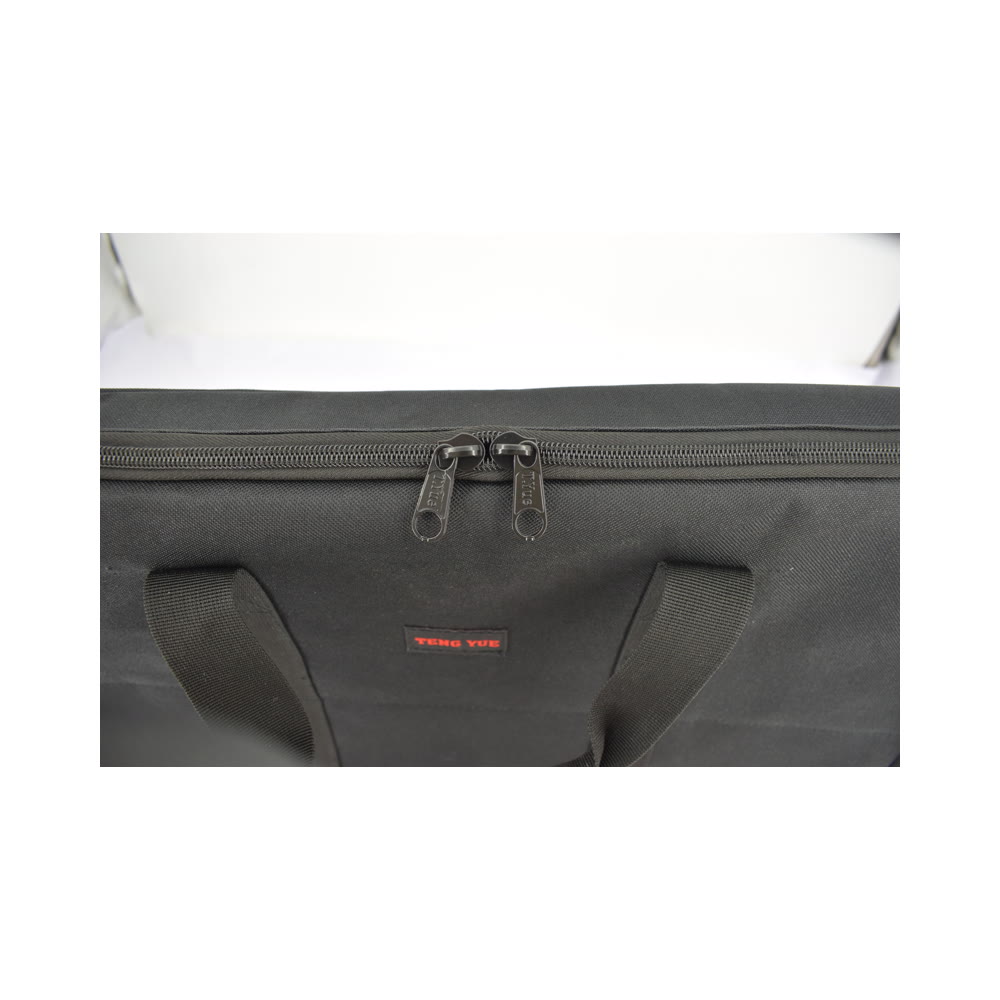
These names are not three parallel categories, which is where most confusion starts. Oxford is a weave: a basket-style weave that gives a smooth, even surface, and in the bag industry it is woven from polyester yarn in grades such as 600D, 900D and 1680D — the D (denier) being the weight of the yarn, so a higher number means a thicker yarn and a heavier, sturdier cloth. Ballistic nylon is a specific heavy nylon weave, originally developed for military flak jackets, with a coarse, dense texture built to resist abrasion and tearing. Polyester on its own is just the fiber family — it could be a strong Oxford weave or a thin, loose cloth, and quotes that say only “polyester” are hiding the detail that matters. Our Oxford fabric denier guide explains how the grades inside the Oxford family compare.
Abrasion and tearing: where each fabric wins
Bag fabric dies in predictable places: the base corners that drag on vehicle floors, the faces that rub against other cargo, and the seams around handles. Ballistic nylon handles that rubbing best — its dense nylon yarn shrugs off abrasion and resists tearing once nicked. 1680D Oxford, with its thick doubled yarn, runs it close and is the grade we use where an Oxford bag needs a premium, hard-wearing skin. 600D Oxford is noticeably lighter-duty: perfectly serviceable for gear that travels by hand and lives in storage, but it will scuff and thin faster under daily vehicle transport. Plain lightweight polyester sits below all of these and is best kept to promotional bags where working life is measured in months, not years. In every case the backing coating and the padding behind the fabric matter too — a mid-grade fabric over good foam outlasts a premium fabric over none.
Printing, color and hand feel
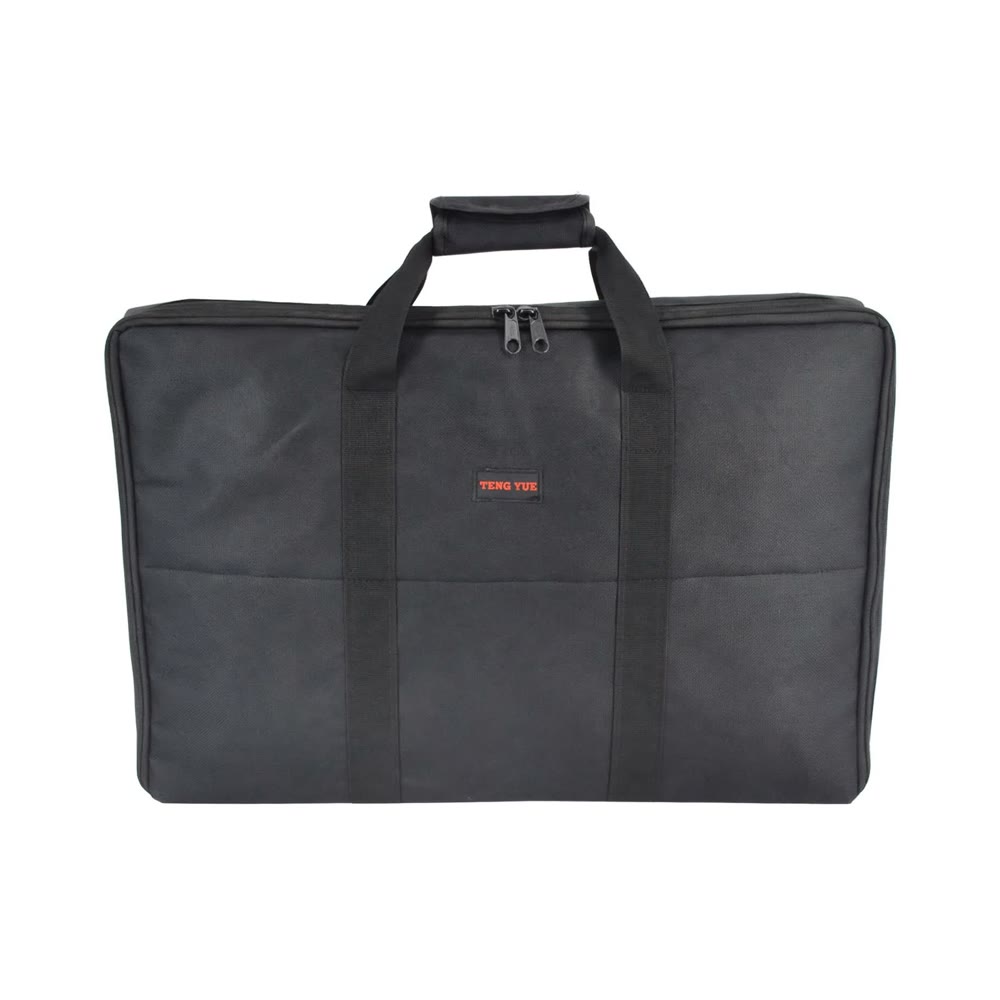
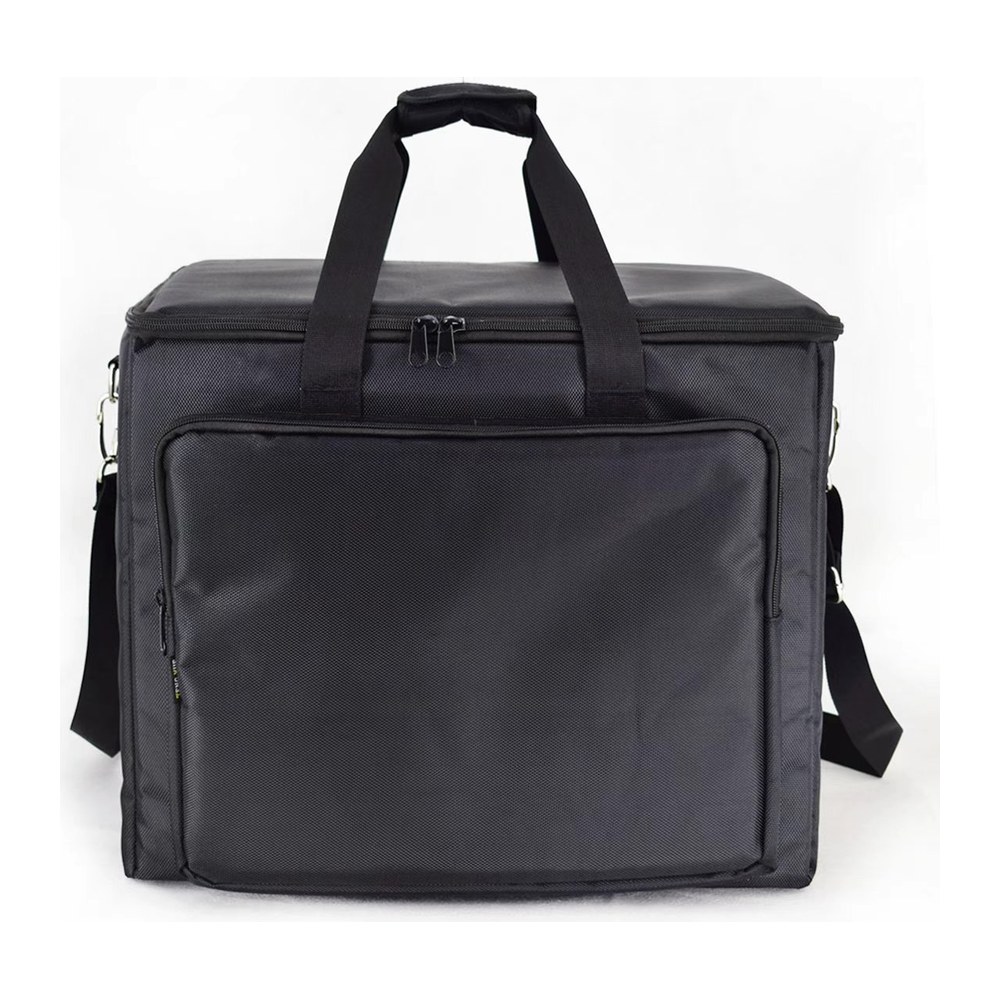
For a B2B buyer the logo is often the point of the bag, and here the ranking flips. Oxford's smooth, even surface takes silk screen printing cleanly, holds heat-transfer color well and sits flat under an embroidery needle — one reason our solar panel carry bag and the rest of the range are built on it. Ballistic nylon's coarse, slightly irregular texture can soften fine lines in a print and makes small embroidered text harder to keep crisp. Color is another practical difference: polyester Oxford dyes consistently batch to batch and holds color well in sunlight, while nylon tends to fade faster outdoors and can be harder to match exactly on a repeat order. Ballistic nylon also has a stiffer, more technical hand feel that suits premium luggage styling; Oxford feels softer and folds flatter, which lowers freight volume on bulk orders.
Cost and weight in a real order
Ballistic nylon typically costs substantially more per meter than Oxford of a similar weight, and that difference multiplies across a production run — before you add its higher cutting and sewing effort. It is also heavier, which buyers feel twice: in the hand and in the freight bill. The sensible pattern we see from experienced buyers is to spend the fabric budget where the wear is: a heavier grade or a reinforced panel on the base and corners, standard Oxford elsewhere, and the savings put into padding and hardware, which is where bags actually fail. Generic polyester wins on price alone and loses almost everywhere else; if a competing quote is dramatically cheaper, an unnamed lightweight polyester is the first place to look for the reason.
| Fabric | What it is | Strengths | Watch out for | Typical use |
|---|---|---|---|---|
| Oxford (polyester) | Basket weave, graded 600D–1680D | Best value; smooth print surface; consistent color | Light grades scuff under daily vehicle use | Equipment bags, OEM house brands |
| Ballistic nylon | Dense heavy nylon weave | Top abrasion and tear resistance | Higher cost and weight; coarse print surface; fades faster outdoors | Premium luggage, extreme-duty cases |
| Generic polyester | Unspecified weave and yarn | Lowest price | Quality varies by mill; shortest working life | Promotional and giveaway bags |
The short checklist
- Ask for the weave and denier, not just the fiber name — “polyester” alone is not a specification.
- Daily vehicle transport or stacking: 1680D Oxford or ballistic nylon on the wear faces.
- Fine logo detail or embroidery: Oxford gives the cleanest result.
- Outdoor use and repeat orders: polyester Oxford holds color more consistently than nylon.
- Spend savings from fabric choice on padding and hardware before upgrading the shell further.
Questions buyers ask
Is Oxford fabric the same as polyester?
Yes, in the bag trade Oxford fabric is a weave style, and the Oxford used for equipment bags is almost always woven from polyester yarn. When a supplier quotes “polyester” without a weave or denier, ask which Oxford grade it is — the weave and yarn weight are what you are actually paying for.
Does ballistic nylon last longer than 1680D Oxford?
Ballistic nylon resists abrasion and tearing slightly better at the same weight, which is why it is used on premium luggage. The gap is smaller than the price gap suggests, and 1680D Oxford closes most of it while printing and embroidering more easily.
Which fabric is best for a printed logo?
Oxford fabric gives the most predictable result across silk screen, heat transfer and embroidery, because its surface is smooth and even. Ballistic nylon’s coarse texture can soften fine print detail, and very light polyester weaves can pucker under embroidery.
Can I mix fabrics in one order?
Yes — buyers often put a heavier grade on the base and corners and a lighter grade on the upper panels. Send us the equipment and how it travels, and we will suggest where the heavier fabric earns its cost before you commit to a full order.