How to Protect a Guitar Amplifier in Transit
Most amplifier damage happens in transit, not on stage — and most of it is preventable with three habits: let the amp cool down before you move it, carry it in a fitted padded bag that covers the knobs and the grille, and load it flat and wedged so it cannot slide or take weight on its face. Everything below is those three habits in detail.
1. What actually breaks on an amplifier
The damage pattern is consistent. Control knobs take knocks, and a hard hit can shear the potentiometer shaft behind the knob — a repair, not a cosmetic issue. Cabinet corners split at the joints. Grille cloth tears when anything presses or scrapes across it. The covering scuffs against every hard edge it rubs. And on valve (tube) amplifiers, the tubes themselves are at risk when the amp is moved while hot. Notice the pattern: the front face and the corners are where amplifiers get hurt, so those are the areas your protection has to cover.
2. Cool down and disconnect first
Valve amplifiers should cool before they travel. Hot tubes are fragile tubes, so switch off and let the amp stand while you pack everything else — by the time the rest of the gear is loaded, the amp is ready to move, and moving it last is a good rule for every reason. Unplug the power and speaker cables rather than wrapping them around the cabinet: a loose cable end swinging against the amp scratches the covering and can crack a knob. Coil cables neatly and put them in the bag's front pocket — never loose inside the bag, where a plug end can press against the grille cloth for the whole journey.
3. The bag: fit and padding do the work
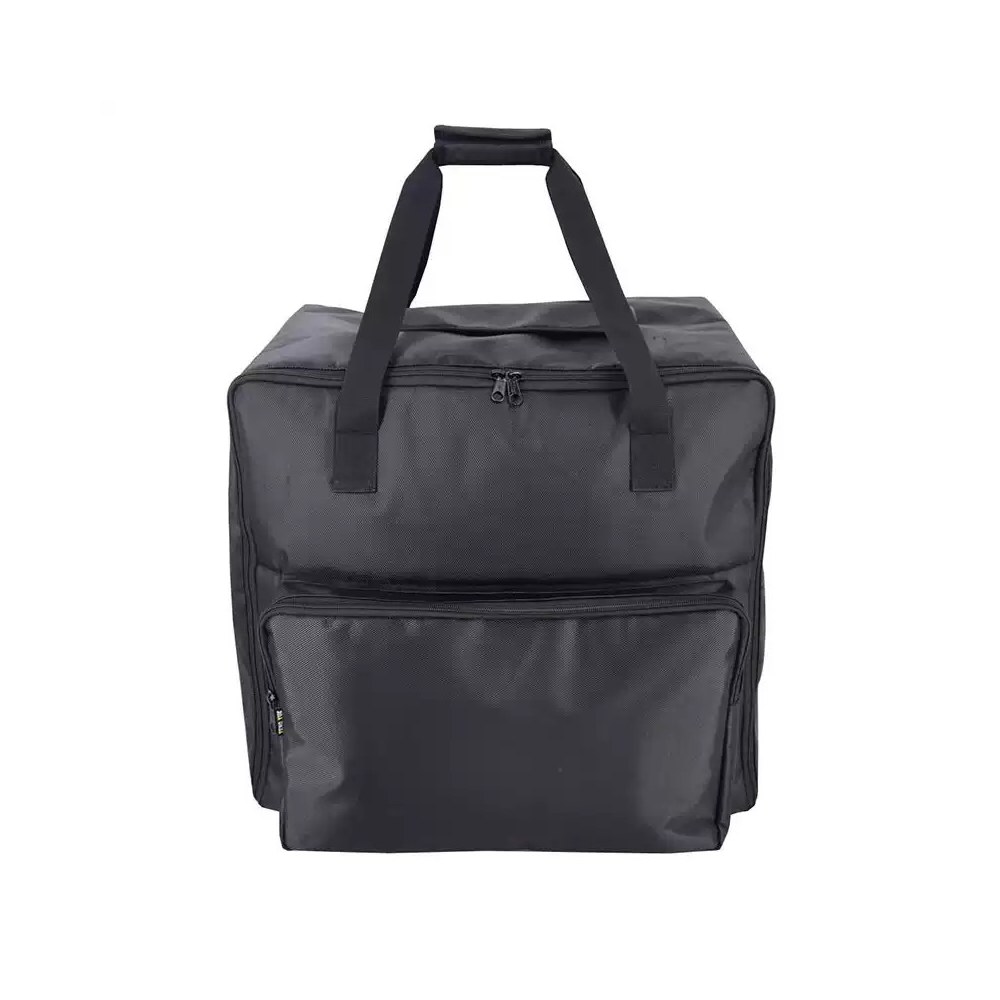
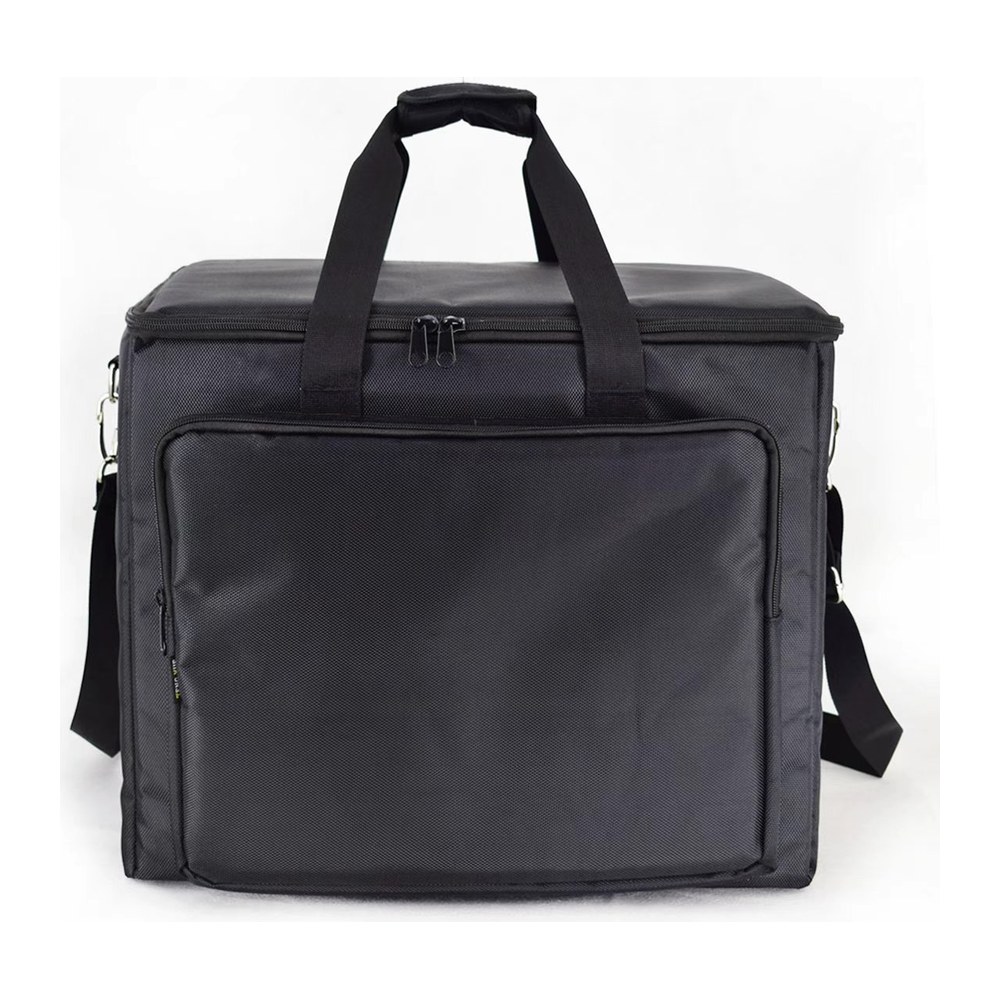
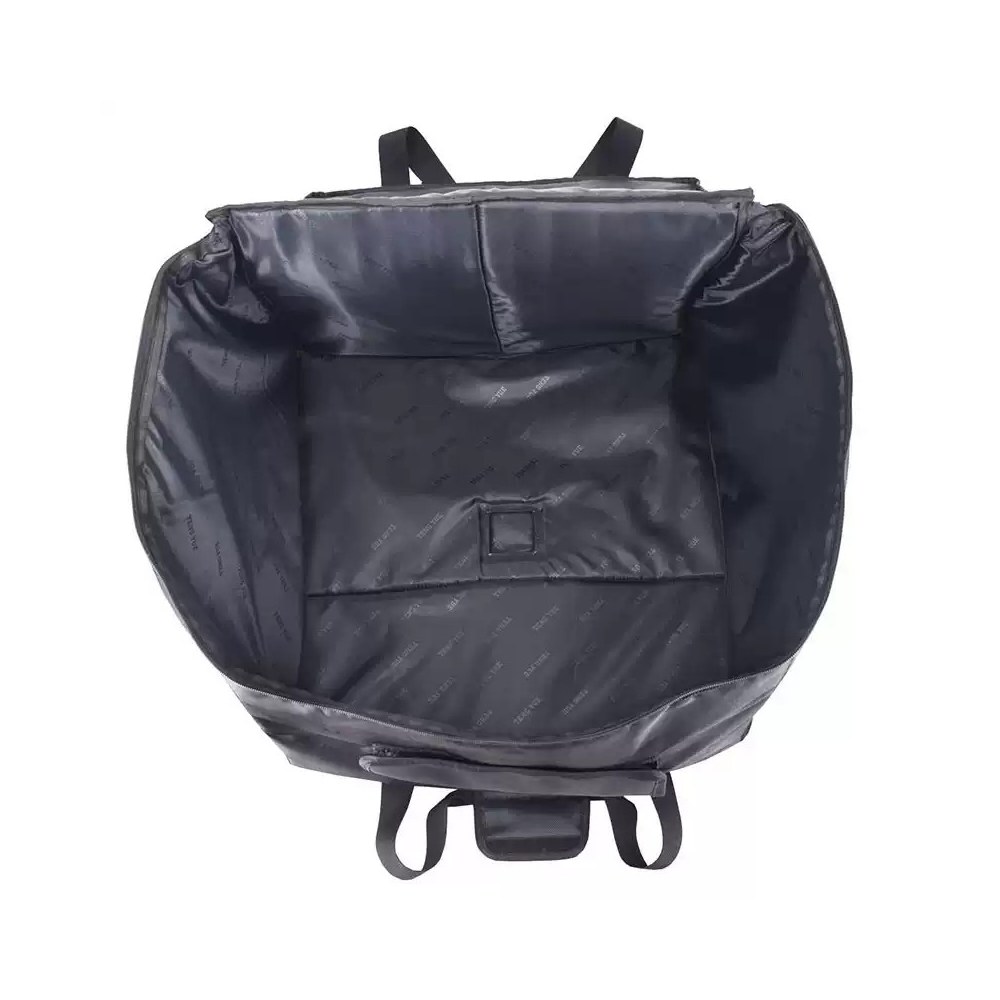
A transit bag earns its keep in three ways. It must fit the cabinet closely, because a loose bag lets the amp shift and land on a corner — the impact you were trying to avoid. It needs foam in the 10 mm class over the faces and corners, with a smooth lining that will not scuff the covering. And it needs handles and stitching rated for the weight, because amplifiers are heavy for their size and a failed handle drops the amp from carrying height. For amp heads, our guitar amplifier head bag adds backpack straps, since a head usually travels with a cabinet carried in the other hand. For combos, our guitar amplifier bag is made to the amplifier's exact size and adds a large front pocket sized for cables and accessories.
4. Loading the vehicle
| Risk in the vehicle | How to load against it |
|---|---|
| Sliding and tipping in corners and braking | Load flat on the floor and wedge with soft gear so the amp cannot move |
| Weight stacked on top of the amp | Nothing on the grille face; light, soft items only, if anything |
| Knobs crushed against a hard surface | Control panel facing the padded bag wall or soft items, never bare metal or wood |
| Rain during load-in and load-out | A padded Oxford bag sheds light rain; for a downpour, wait for cover rather than soaking the amp |
The amplifier should be the last thing loaded and the first thing unloaded. That keeps it out of the stacking pile, shortens the time it spends in a hot or cold vehicle, and — for valve amps — guarantees it had its full cooling time before the journey and gets unpacked before anything is dropped on it at the other end.
5. Between gigs: storage counts too
Transit habits end at home, but storage habits continue the protection. Keep the amp indoors and dry, in its bag, which doubles as a dust cover. Leave the cables coiled in the front pocket so the next load-out starts organized. Do not store the amplifier standing on its face or with gear stacked on it, and if the bag comes home damp from a wet load-out, dry it open before storing — the same rule that applies to every padded bag.
The short checklist
- Cool valve amplifiers down before moving them — move the amp last
- Unplug cables and coil them into the front pocket
- Use a fitted padded bag: knobs and grille covered
- Load flat and wedged, nothing heavy on the grille face
- Store dry, in the bag, between gigs
Questions buyers ask
Is a padded bag enough protection, or do I need a hard case?
A fitted padded bag is enough for car transport and load-ins, which are the journeys most amplifiers make. Hard cases earn their extra weight and cost for freight, air cargo and stacked truck loads, where other cargo — not your own hands — decides what lands on the amp.
How long should a tube amp cool before I move it?
Move it last. Hot tubes are fragile, and by the time cables are coiled and the rest of the gear is packed and loaded, a valve amplifier has shed the heat that makes moving it risky. Building the habit of loading the amp last removes the need to time anything.
Should cables travel inside the bag with the amp?
Yes — in the front pocket, not loose inside the bag. A cable plug left loose against the grille cloth can press, rub and eventually tear it during a journey. A front pocket keeps cables with the amp and off its surfaces, which is why our amplifier bags are built with one.
Can you make a bag for my exact amplifier model?
Yes. Send the cabinet’s outside dimensions — length, width and height at the widest points, knobs included — and we cut the bag to that size. A sample is ready in 5–7 days so you can test the fit on your own amplifier before production.