Webbing, Zippers and Buckles: The Hardware That Decides How Long a Bag Lasts
Ask a repair shop what kills bags and the answer is rarely the fabric: handles tear out, zippers split open, buckles snap. The hardware — webbing straps, zippers, buckles and the stitching that joins them — carries every load the bag will ever lift, and it decides the working life of the bag long before the cloth wears out. Specifying it well costs little; replacing a failed bag in a customer's hands costs a great deal more.
Webbing: the strap is a structural part
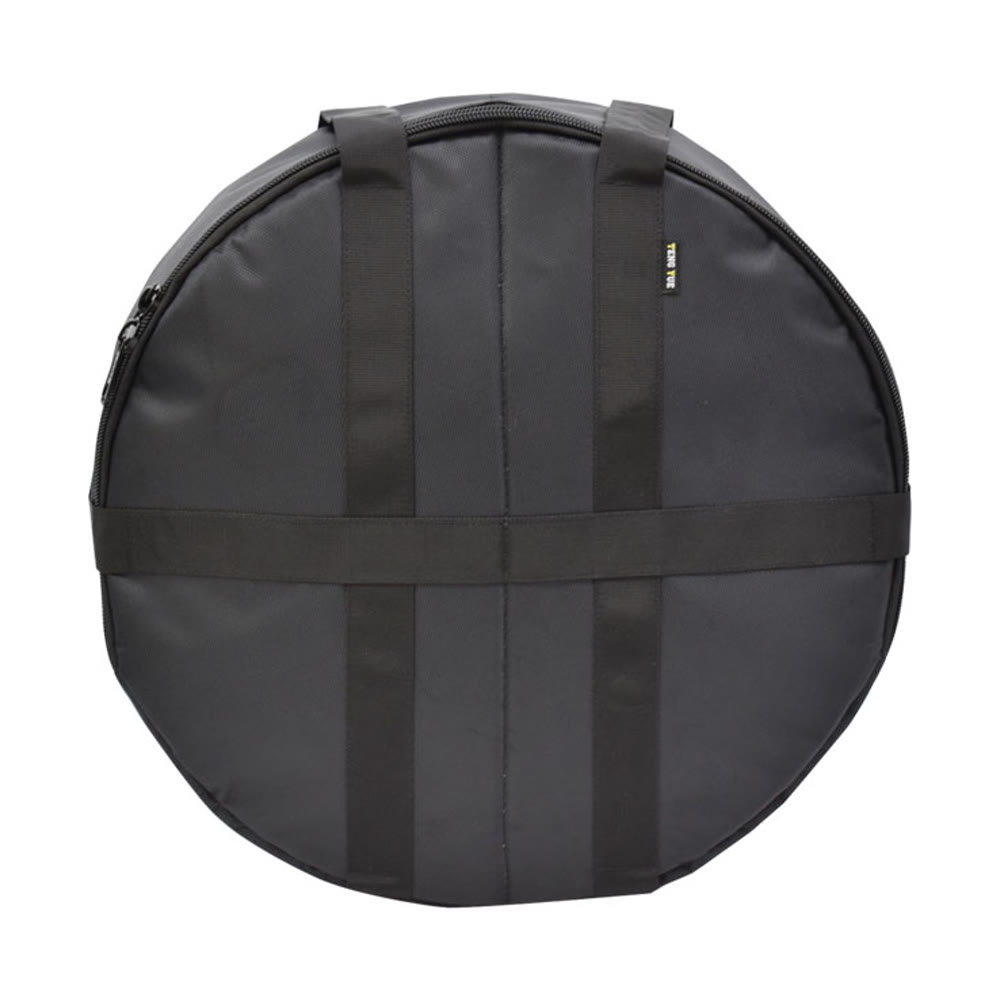
Webbing comes in two main materials. PP (polypropylene) webbing is light, inexpensive, colorfast and completely unaffected by water — it is the standard for equipment bags and outdoor gear. Nylon webbing is stronger size for size and feels softer and more premium in the hand, but it absorbs water, stretches slightly when wet and costs more. Width matters as much as material: a narrow strap concentrates the whole load on a small stitched area and cuts into the hand, while a wider strap spreads both. For heavy equipment, look for webbing that runs under the bag or wraps the full body rather than ending at a side seam, so the load hangs from the strap itself instead of from the fabric. Our weighted training backpack is the extreme case in our range: the load is literally steel plates, so the webbing layout and anchor stitching do more work than any other part of the bag.
Stitching: where handles actually fail
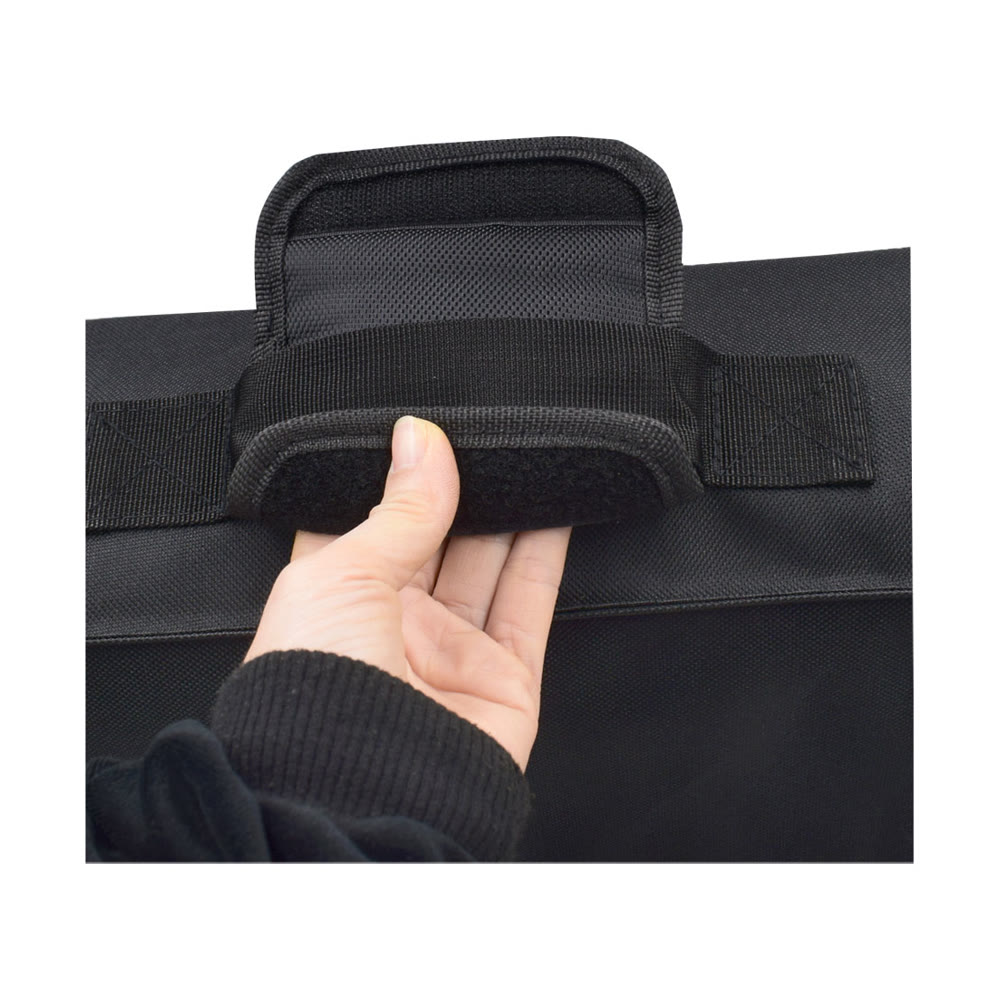
A handle almost never snaps in the middle — it tears out where it is sewn on. The anchor is the specification to check. A single straight seam line puts the entire lifting force on a few stitches, which saw through the fabric one by one. The heavy-duty pattern is a box stitch with an X sewn across it, worked through a reinforcement patch, with bar tacks — dense clusters of stitches — at the corners where stress concentrates. When you evaluate any sample, ours included, turn the handle anchor over and count what you see: a generous stitched area with an X pattern is a bag built to be lifted fully loaded for years; two short parallel lines are a bag built to a price. This is also why sampling matters more than photographs — stitching quality is invisible in a product picture and obvious in the hand.
Zippers: size, type and direction
The zipper is the hardest-working moving part on the bag. Coil zippers (a continuous spiral of nylon) are flexible, forgiving of misalignment and the right choice for curved or long openings; molded-tooth zippers are chunkier and resist being forced apart, suiting straight, heavy-duty closures. Size is the shorthand for strength — a larger gauge chain and slider handle heavier fabric and rougher handling. Two-way zippers, with two sliders that meet in the middle, are worth specifying on wide equipment bags because the bag can be opened from either side and the sliders share the wear. Details that separate a good installation from a poor one: the zipper should be sewn so the fabric lips cover the chain, the ends should be anchored into the seam rather than stopping short, and the pull should be big enough to grip with gloves on. A zipper failure in the field usually traces back to an undersized chain or a slider that was cheap, not to the concept of a zipper itself.
Buckles, sliders and handles
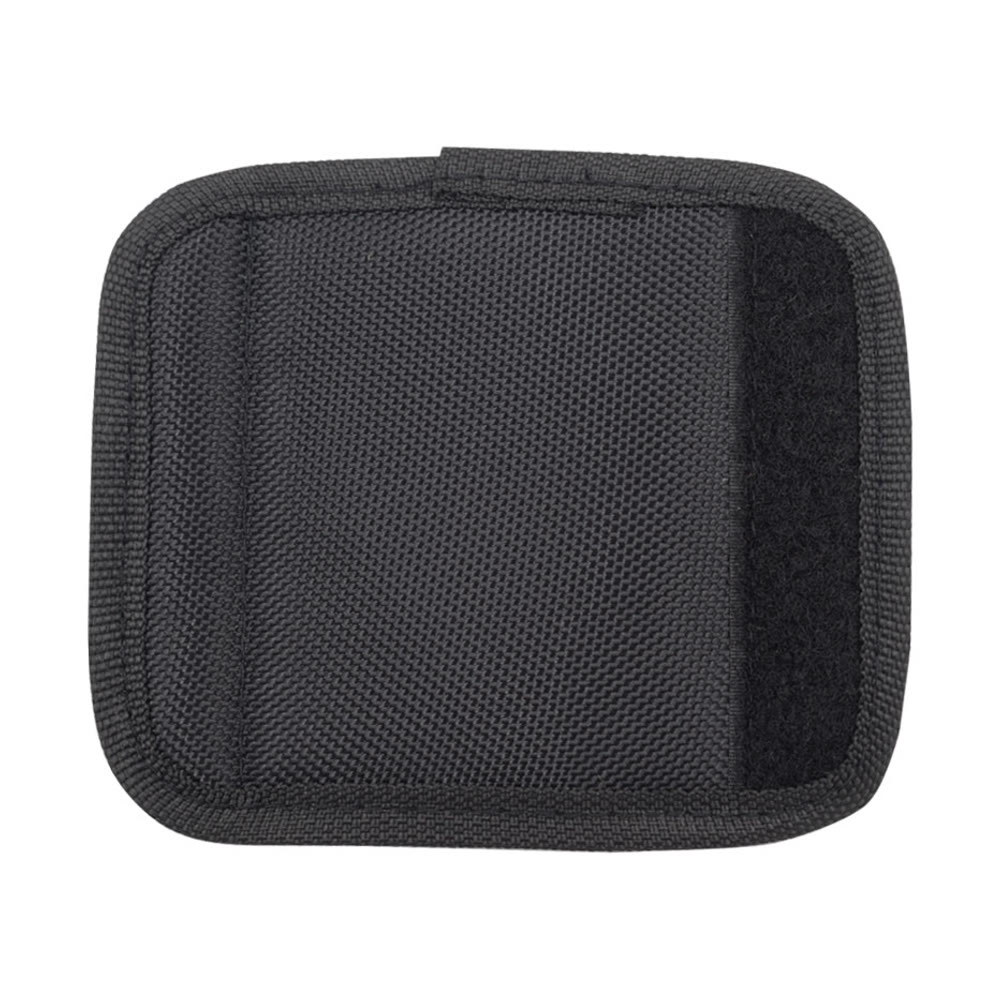
Plastic side-release buckles and adjuster sliders are standard, light and corrosion-proof; their weakness is brittleness — a buckle that will be stepped on, frozen or asked to hold a heavy shifting load deserves a thicker molding or a metal alternative. Metal hardware looks premium and shrugs off impact, at the cost of weight and a higher price. Handles deserve the same engineering attention: a bare webbing loop is adequate for a light bag and miserable under a heavy one, which is why padded handle wraps exist — our padded carry handle sleeve slides over an existing handle and puts foam between webbing and palm. When a bag will be carried any distance at full weight, build that padding into the handle from the start rather than treating it as an accessory.
| Component | Economy choice | Heavy-duty choice | Failure it prevents |
|---|---|---|---|
| Webbing | Narrow PP strap, ends at side seam | Wider strap wrapping under the body | Strap tearing away under load |
| Handle anchor | Two straight seam lines | X-box stitch through a reinforcement patch | Handle tearing out of the fabric |
| Zipper | Small-gauge coil, single slider | Larger gauge, two-way sliders, anchored ends | Chain splitting and slider failure |
| Buckles | Thin plastic molding | Thick molding or metal | Buckle snapping when stepped on or frozen |
The short checklist
- Specify webbing width and layout — a strap that wraps the body outlives one that ends at a seam.
- Check handle anchors on the sample: X-box stitching and bar tacks, through a patch.
- Size the zipper to the load, and choose two-way sliders on wide bags.
- Match buckles to the environment: thick moldings or metal where impact and cold are expected.
- Pad any handle that will carry real weight over real distance.
Questions buyers ask
Which fails first on a cheap bag: fabric or hardware?
Hardware fails first in almost every case — handles tear out at their anchor points, zipper sliders split, and plastic buckles snap under load. Fabric usually outlives all three, which is why hardware specification matters more than a fabric upgrade.
Is nylon webbing always better than PP webbing?
Nylon webbing is stronger and softer in the hand, but it absorbs water and can stretch when wet; PP webbing is lighter, cheaper and unaffected by water. For most equipment bags PP webbing of the right width, properly stitched, carries the load without any practical disadvantage.
What stitch pattern should a load-bearing handle have?
Ask for a box stitch with an X across it (an X-box pattern) plus bar tacks at the stress points, sewn through a reinforced patch. That spreads the pull across many stitches instead of letting one seam line carry the whole load.
Can hardware be matched to my brand colors?
Yes — webbing is dyed or woven to order in custom colors, and buckles and zipper pulls can be color-matched or fitted with a woven logo label. Send your brand colors with the inquiry and the sample will come back matched.