Keyboard Bag Buying Guide: Sizes, Padding and Carry Options

A keyboard bag has one job: get a long, heavy, easily marked instrument from home, school or studio to the venue and back without bent corners, cracked casing or a scratched control panel. Keyboards punish the wrong bag: the load is long, and the top surface carries sliders, knobs and a display that do not tolerate pressure. This guide covers the four decisions that decide whether a keyboard travels safely — true size, padding placement, carry system and fabric — and how our factory specs each one.
1. Start with key count, finish with a tape measure
Key count is the first filter, not the final size. A 61-key board, a 76-key board and an 88-key digital piano each need a different bag length, but two keyboards with the same key count can differ in depth and height because of their control panels and end cheeks. Measure the keyboard itself — length, depth and height at the tallest point, usually the back panel or a raised display — and add a small working allowance so the zipper closes without pressing on the ends.
Weight matters as much as size: stage pianos and workstations can be genuinely heavy, and a bag that fits on paper still fails if its handles and seams are specced for a light home keyboard. If you are ordering for a school, church, rental pool or a whole keyboard range, our guide on how to measure equipment for a custom bag walks through the measurement routine we ask buyers to follow before we cut a pattern.
2. Padding: protect the top panel and the ends
On a keyboard, the fragile face is the top. Knobs, sliders, pitch and modulation wheels and the display all sit on the control panel, and a bag pressing flat against them in a stacked car boot does quiet damage. Look for foam that covers the full top face, a soft lining against the panel, and extra reinforcement at both ends, where the casing corners meet door frames, steps and boot edges.
For keyboards that travel weekly, 10 mm foam is the sensible baseline; a home keyboard that moves twice a year can use 5 mm and stay light. Our explainer on bag padding thickness sets out how foam thickness trades against weight and bulk. Whichever thickness you choose, the zipper should open on three sides so the keyboard lifts straight out instead of being dragged across the lining.
| Keyboard | Typical carry need | Bag features to prioritise |
|---|---|---|
| 61-key home or portable keyboard | Short trips, carried by one person | Light padding, top handle, shoulder strap |
| 76-key stage keyboard | Regular gigs, car transport | 10 mm foam, reinforced ends, accessory pocket |
| 88-key digital piano | Heavy load, often a two-person lift | Full padding, handles at both ends, backpack straps or wheels |
3. Carry options: match the system to the weight
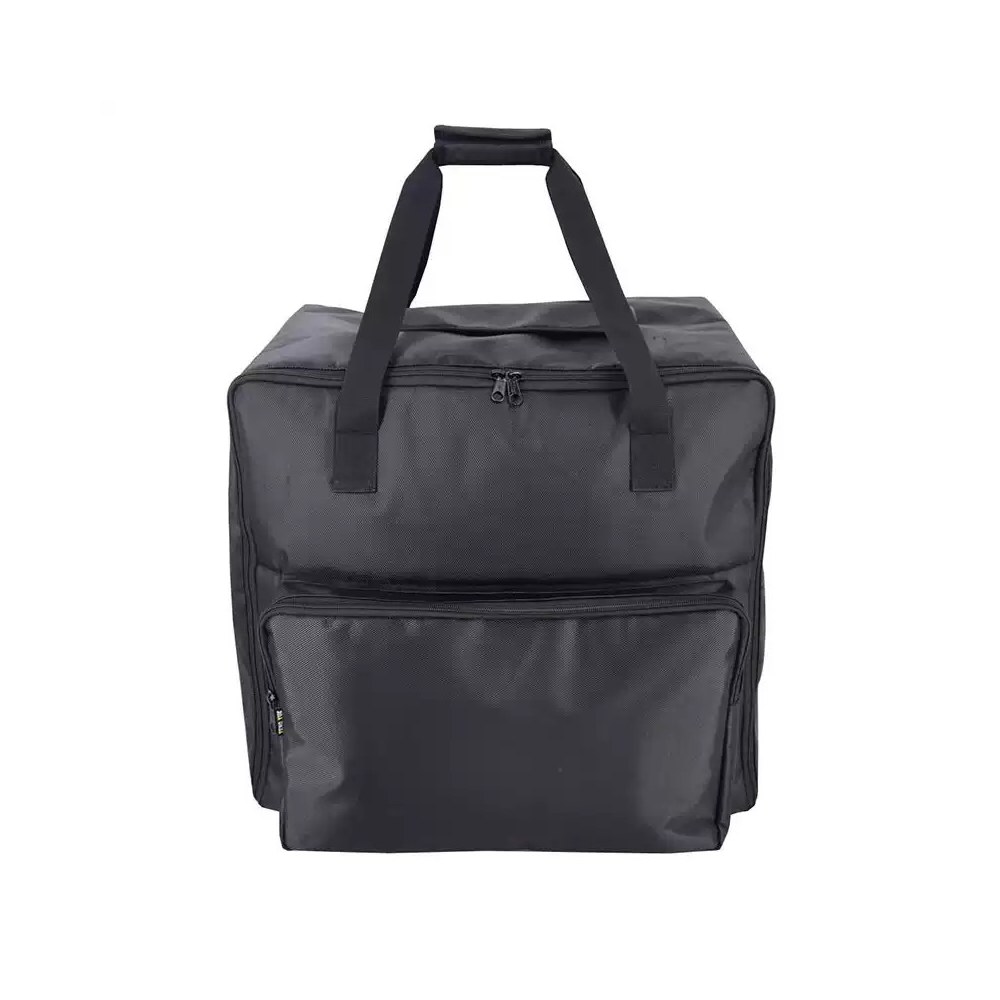
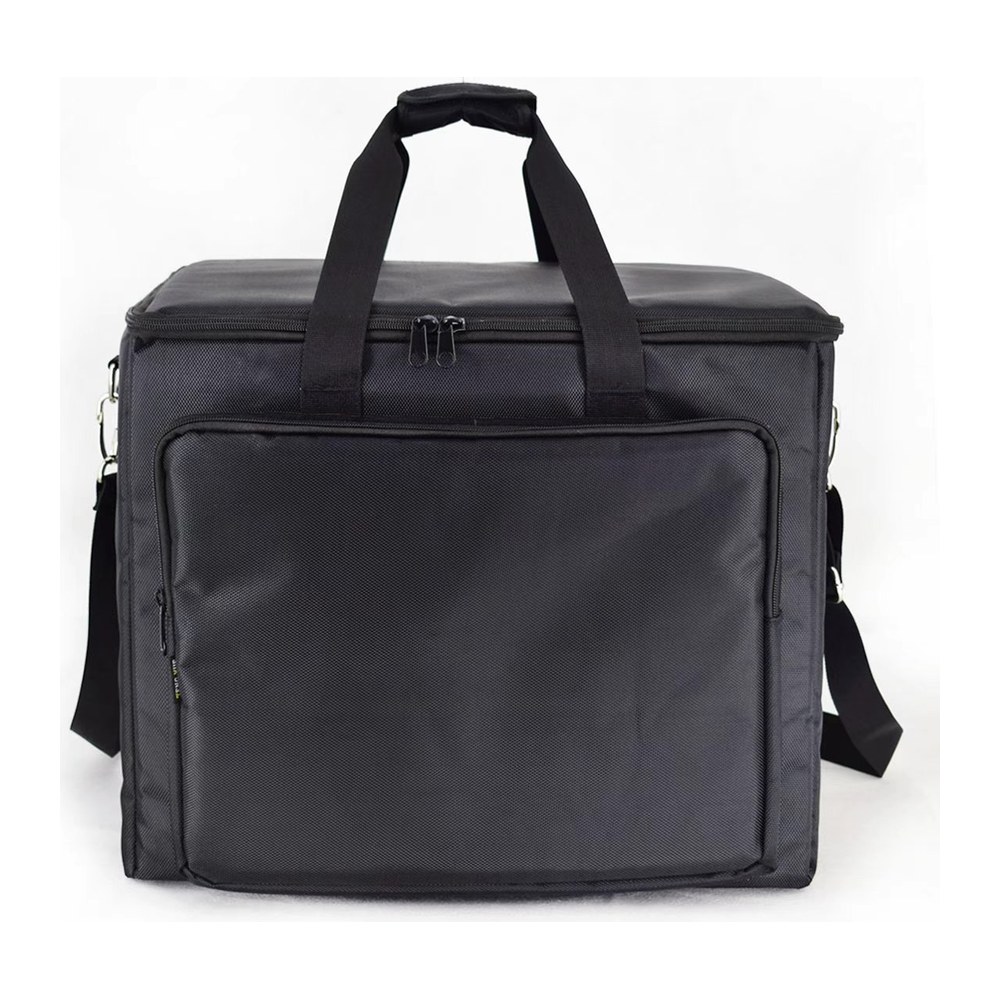
A light 61-key board is happy with a padded top handle and a shoulder strap. Heavier keyboards need more: handles at both ends so two people can lift the bag level, and backpack straps that let one player carry an 88-key board across a car park with hands free for a stand. Wheeled bags suit the heaviest pianos on smooth floors, but wheels add weight and hard points of their own, so they earn their place only when the instrument is carried a long way on flat ground. Whichever system you choose, the handles must be anchored into the bag's seams with webbing, not stitched onto a single layer of fabric.
4. Fabric, zippers and the accessory pocket
Oxford fabric is the working choice for keyboard bags: 600D keeps a home keyboard bag light, while 900D or 1680D stands up to the rubbing and stacking of regular gigging. A water-resistant backing keeps rain off during the walk from the car to the stage door. Two-way zippers matter on a long bag: the opening runs most of its length, and you will not always approach it from the same end. Finally, spec a pocket that fits the kit — sustain pedal, power supply, music rest and cables — or they end up loose inside the bag, pressing against the keys.
5. Custom sizes and logos for schools, brands and rental pools
Keyboards are a natural custom order: sizes vary too much between models for one generic bag to fit a whole fleet. Our factory cuts each pattern to the buyer's dimensions, and our small-batch workshop handles mixed orders — several keyboard sizes in one production run, each with the same branding. Logo options, fabric colours and pocket layouts are covered on our customization page; send us the model list or the measurements for each keyboard and we will spec the set.
The short checklist
- Measured length, depth and height of the keyboard itself, not its box
- Foam over the full top panel, reinforced at both ends
- Three-side zipper opening so the keyboard lifts straight out
- Handles anchored in the seams; backpack straps or wheels for heavy boards
- Pocket sized for the pedal, power supply and cables
- Fabric grade matched to how often the keyboard travels
Questions buyers ask
What size bag does an 88-key keyboard need?
An 88-key keyboard needs a bag cut to its own measured length, depth and height, with a small working allowance for the zipper. Key count sets the length band, but control panels and end cheeks vary between models, so we cut from your measurements, not from the key count alone.
How much padding does a keyboard bag need?
10 mm foam is the right baseline for a keyboard that travels weekly, with full coverage over the top control panel. A home keyboard that rarely moves can use 5 mm and stay lighter to carry.
Are backpack straps worth it on a piano bag?
Yes, on heavier stage pianos and workstations. Backpack straps spread the load across both shoulders and keep the player's hands free for a stand or bench.
Can you make matching bags for a school or rental fleet?
Yes. Send the model list or the measurements for each keyboard and we cut a pattern per model, with the same fabric, logo and pocket layout across the set.
Send your keyboard model or its measurements through the contact page and we will spec a bag that fits it properly.